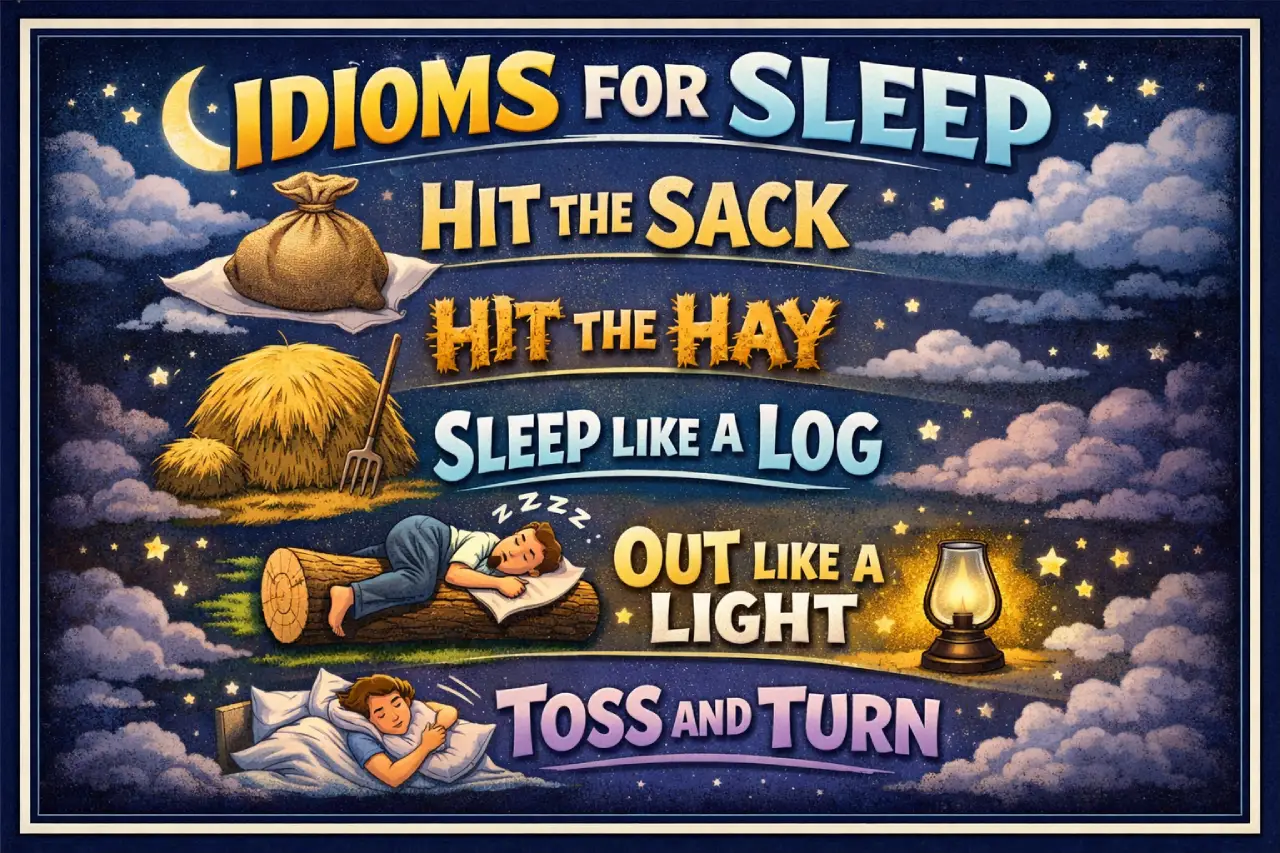
Sleep is something we all need—but the way we talk about it in English goes far beyond simply saying “go to bed.” From falling asleep instantly to tossing and turning all night, the English language is packed with colorful idioms that describe sleep in vivid ways.
Quick answer: Idioms for sleep are expressions that describe sleeping habits, tiredness, insomnia, or rest using figurative language instead of literal phrases.
Sleep isn’t just a daily routine—it’s full of expressions and idioms that bring language to life. In this guide, we explore a rich collection of sleep-related idioms, with clear meanings, quick examples, and practical tips to make your English more vivid and natural.
Why Sleep Idioms Are So Useful
Sleep is deeply connected to our daily lives, moods, and productivity. That’s why so many idioms revolve around it.
From my experience, these idioms are especially useful because they:
- Make conversations sound more natural
- Help describe tiredness or rest more vividly
- Add personality and humor to everyday language
Let’s dive in.
1. Hit the Sack
Meaning: Go to bed
In a Sentence: I’m exhausted—I’m going to hit the sack.
Other Ways to Say: Go to sleep
Tone: Informal
2. Hit the Hay
Meaning: Go to bed
In a Sentence: Let’s hit the hay early tonight.
Other Ways to Say: Sleep
Tone: Casual
3. Sleep Like a Log
Meaning: Sleep very deeply
In a Sentence: I slept like a log last night.
Other Ways to Say: Deep sleep
Tone: Positive
4. Out Like a Light
Meaning: Fall asleep instantly
In a Sentence: He was out like a light within minutes.
Other Ways to Say: Fall asleep quickly
Tone: Informal
5. Toss and Turn
Meaning: Struggle to sleep
In a Sentence: I tossed and turned all night.
Other Ways to Say: Restless sleep
Tone: Neutral
6. Catch Some Z’s
Meaning: Sleep
In a Sentence: I need to catch some Z’s.
Other Ways to Say: Take a nap
Tone: Casual
7. Sleep on It
Meaning: Delay a decision
In a Sentence: Let me sleep on it before deciding.
Other Ways to Say: Think overnight
Tone: Neutral
8. Burn the Midnight Oil
Meaning: Stay up late working
In a Sentence: She burned the midnight oil studying.
Other Ways to Say: Work late
Tone: Formal
9. Not Sleep a Wink
Meaning: No sleep at all
In a Sentence: I didn’t sleep a wink.
Other Ways to Say: Stay awake
Tone: Neutral
10. Dead to the World
Meaning: Sleeping deeply
In a Sentence: He was dead to the world.
Other Ways to Say: Deep sleep
Tone: Informal
11. Night Owl
Meaning: Someone active at night
In a Sentence: I’m a night owl.
Other Ways to Say: Stay up late
Tone: Neutral
12. Early Bird
Meaning: Someone who wakes early
In a Sentence: She’s an early bird.
Other Ways to Say: Morning person
Tone: Positive
13. Count Sheep
Meaning: Try to fall asleep
In a Sentence: I counted sheep for hours.
Other Ways to Say: Relax to sleep
Tone: Casual
14. Sleep Like a Baby
Meaning: Sleep peacefully
In a Sentence: I slept like a baby.
Other Ways to Say: Rest well
Tone: Positive
15. In the Land of Nod
Meaning: Asleep
In a Sentence: He was in the land of nod.
Other Ways to Say: Sleeping
Tone: Playful
16. Catch Forty Winks
Meaning: Take a short nap
In a Sentence: I’ll catch forty winks.
Other Ways to Say: Nap
Tone: Informal
17. Fast Asleep
Meaning: Sleeping deeply
In a Sentence: She was fast asleep.
Other Ways to Say: Sound asleep
Tone: Neutral
18. Sleep Like the Dead
Meaning: Very deep sleep
In a Sentence: He slept like the dead.
Other Ways to Say: Heavy sleep
Tone: Strong
19. Up All Night
Meaning: No sleep
In a Sentence: I was up all night working.
Other Ways to Say: Stayed awake
Tone: Neutral
20. Sleep Tight
Meaning: Sleep well
In a Sentence: Sleep tight tonight!
Other Ways to Say: Good night
Tone: Friendly
21. Drift Off
Meaning: Fall asleep slowly
In a Sentence: I drifted off during the movie.
Other Ways to Say: Doze off
Tone: Neutral
22. Doze Off
Meaning: Fall asleep unintentionally
In a Sentence: He dozed off in class.
Other Ways to Say: Fall asleep
Tone: Casual
23. Light Sleeper
Meaning: Easily awakened
In a Sentence: I’m a light sleeper.
Other Ways to Say: Sensitive sleeper
Tone: Neutral
24. Sleep Deprivation
Meaning: Lack of sleep
In a Sentence: Sleep deprivation affects focus.
Other Ways to Say: Lack of rest
Tone: Serious
25. Cat Nap
Meaning: Short sleep
In a Sentence: I took a quick cat nap.
Other Ways to Say: Nap
Tone: Casual
26. Sleep It Off
Meaning: Recover through sleep
In a Sentence: He slept it off after the party.
Other Ways to Say: Rest to recover
Tone: Informal
27. Wide Awake
Meaning: Fully alert
In a Sentence: I’m wide awake now.
Other Ways to Say: Fully conscious
Tone: Neutral
28. Dead Tired
Meaning: Extremely tired
In a Sentence: I’m dead tired tonight.
Other Ways to Say: Exhausted
Tone: Strong
29. Catch Up on Sleep
Meaning: Recover lost sleep
In a Sentence: I need to catch up on sleep.
Other Ways to Say: Rest more
Tone: Neutral
30. Sleep Through Something
Meaning: Not wake up during an event
In a Sentence: He slept through the alarm.
Other Ways to Say: Miss while sleeping
Tone: Neutral
31. Drop Off
Meaning: Fall asleep
In a Sentence: I dropped off quickly.
Other Ways to Say: Drift off
Tone: Casual
32. Snore Like a Chainsaw
Meaning: Loud snoring
In a Sentence: He snores like a chainsaw.
Other Ways to Say: Loud snorer
Tone: Humorous
33. Run on Empty
Meaning: Function without rest
In a Sentence: I’m running on empty today.
Other Ways to Say: Exhausted
Tone: Informal
Final Thoughts
Sleep idioms are a fun and practical way to make your English more expressive and relatable. Whether you’re “hitting the sack,” “catching some Z’s,” or “tossing and turning,” these phrases bring everyday experiences to life in a more colorful way.
When I use these idioms in conversation, I notice how naturally they fit—they make even simple situations sound more engaging and human.
If you want to explore more, you can check out ideas from this helpful collection of sleep idioms or discover additional expressions in this practical guide to sleep-related phrases, but the real key is using them naturally in your own voice.
Now here’s a simple question for you:
Which of these idioms describes your sleep habits best?