The ocean has fascinated humans for thousands of years. It represents adventure, mystery, danger, freedom, and endless possibility. Because the sea played such an important role in exploration and trade, many expressions in English developed from maritime life. Today, these idioms for the ocean appear in everyday conversations, business discussions, storytelling, and literature.
An idiom is a phrase whose meaning isn’t always literal. For instance, if someone says they feel “at sea,” they’re not actually floating in the ocean—they mean they feel confused or uncertain. Similarly, “smooth sailing” describes a situation that progresses easily.
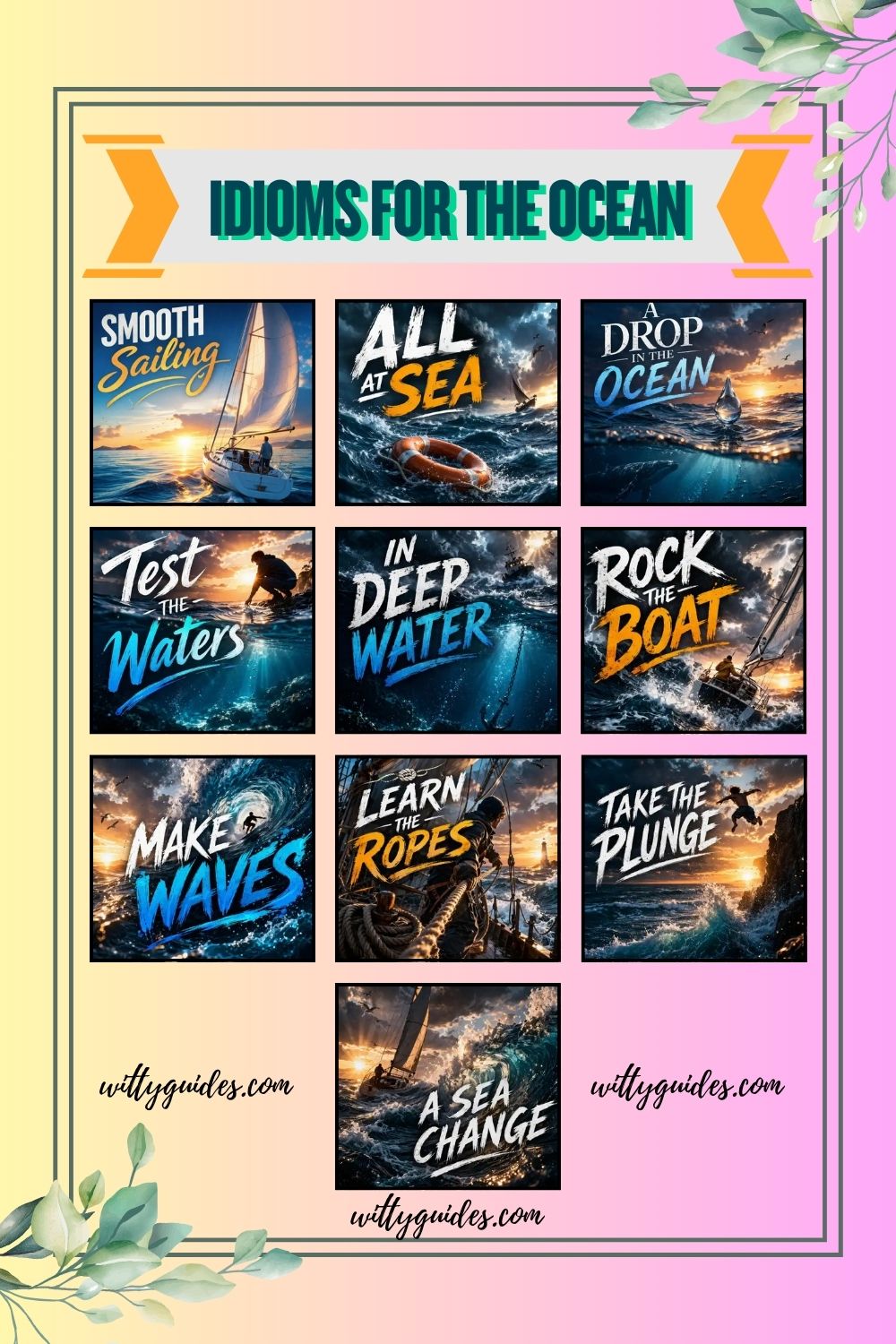
In this guide to 33 idioms for the ocean, you’ll discover vivid English expressions inspired by the sea. Each idiom is explained with a clear meaning, a simple example sentence, and helpful context so you can understand how these ocean-inspired phrases enrich everyday English.
1. Smooth Sailing
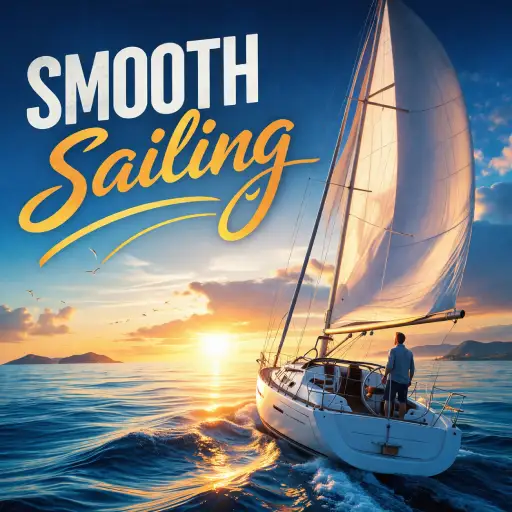
Meaning: A situation that progresses easily without problems.
In a Sentence: After months of preparation, the product launch was smooth sailing.
Other Ways to Say: Easy progress, effortless success
Why It Works: Calm seas allow ships to travel easily.
Best Used For: Projects or plans going well.
2. All at Sea
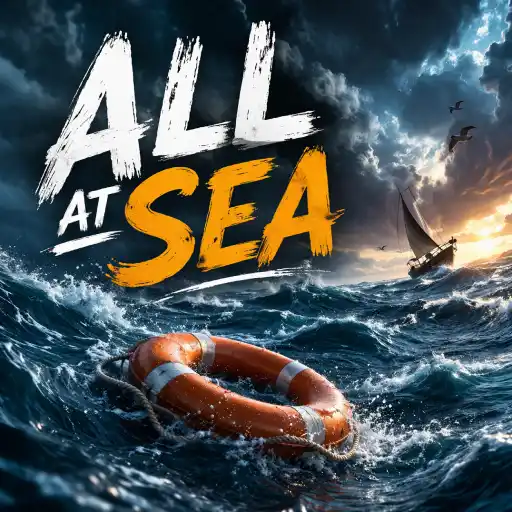
Meaning: Feeling confused or uncertain.
In a Sentence: When the instructions changed, the entire team felt all at sea.
Other Ways to Say: Confused, lost, unsure
Why It Works: Sailors can become disoriented in the open ocean.
Best Used For: Situations involving uncertainty.
3. A Drop in the Ocean
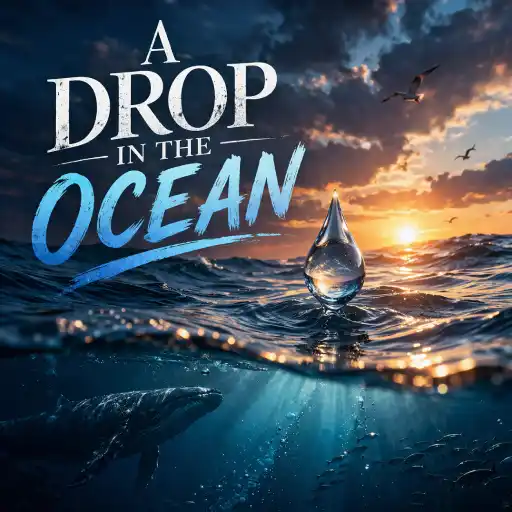
Meaning: A very small amount compared to what is needed.
In a Sentence: The donation was generous but still just a drop in the ocean compared to the total cost.
Other Ways to Say: Tiny portion, small contribution
Why It Works: The vast ocean makes any single drop insignificant.
Best Used For: Discussing scale or proportion.
4. Test the Waters
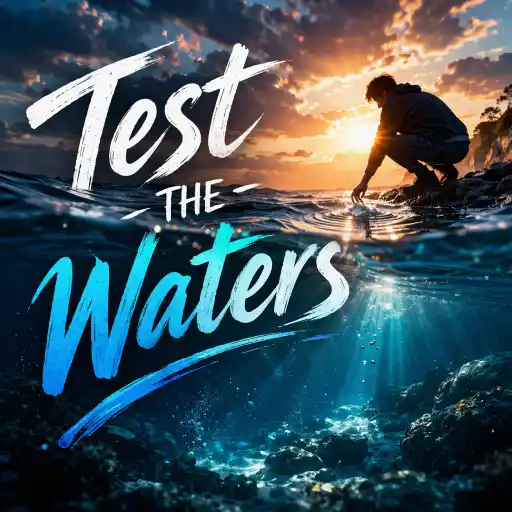
Meaning: Try something cautiously before committing fully.
In a Sentence: The company tested the waters before expanding into international markets.
Other Ways to Say: Try cautiously, experiment first
Why It Works: Sailors check water conditions before sailing further.
Best Used For: Business or decision-making.
5. In Deep Water
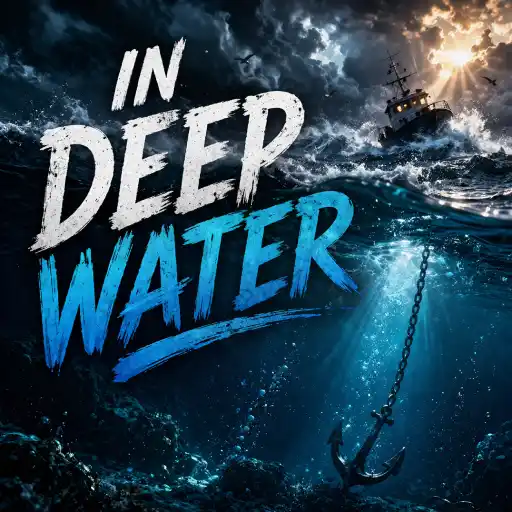
Meaning: Facing serious trouble or difficulty.
In a Sentence: He found himself in deep water after missing the deadline.
Other Ways to Say: In trouble, facing difficulty
Why It Works: Deep water can be dangerous for swimmers.
Best Used For: Risky situations.
6. Rock the Boat
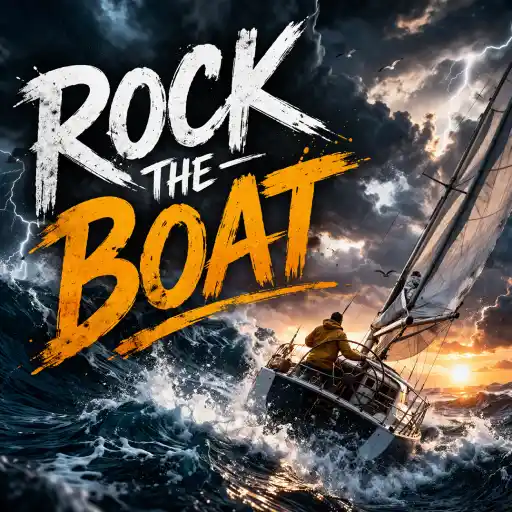
Meaning: Cause trouble or disrupt a stable situation.
In a Sentence: She avoided criticizing the plan because she didn’t want to rock the boat.
Other Ways to Say: Disturb the peace, cause conflict
Why It Works: Rocking a boat can destabilize it.
Best Used For: Workplace or group dynamics.
7. Make Waves
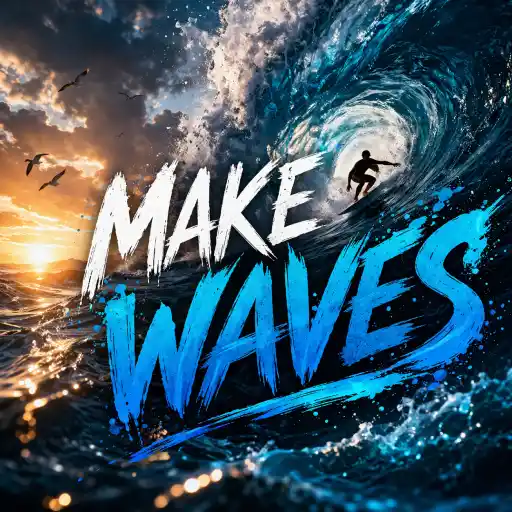
Meaning: Cause noticeable change or attention.
In a Sentence: The young entrepreneur is making waves in the tech industry.
Other Ways to Say: Create impact, cause a stir
Why It Works: Waves represent movement and attention.
Best Used For: Innovation or influence.
8. Learn the Ropes

Meaning: Learn the basics of a new job or skill.
In a Sentence: It took a few weeks to learn the ropes at my new job.
Other Ways to Say: Understand the basics, get familiar
Why It Works: Sailors must understand ropes and rigging to operate a ship.
Best Used For: Training and new experiences.
9. Take the Plunge
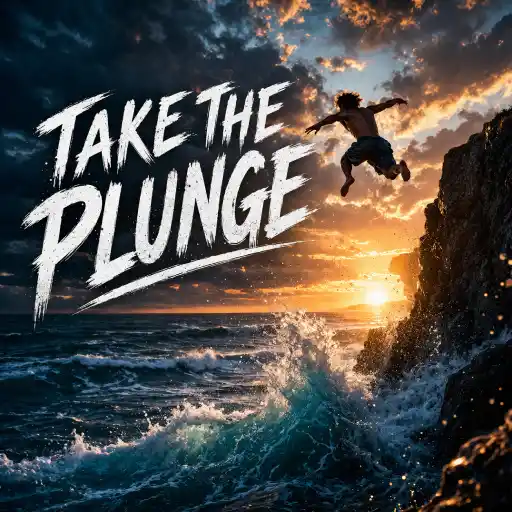
Meaning: Decide to do something bold or risky.
In a Sentence: After months of planning, she finally took the plunge and started her own business.
Other Ways to Say: Take the leap, go for it
Why It Works: Jumping into water represents commitment.
Best Used For: Major decisions.
10. A Sea Change
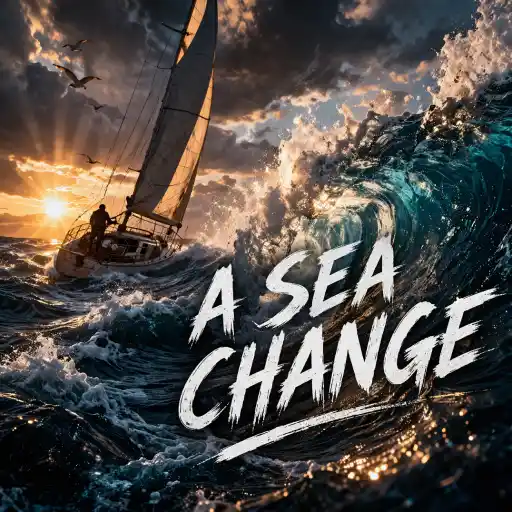
Meaning: A major transformation or shift.
In a Sentence: Remote work created a sea change in company culture.
Other Ways to Say: Dramatic change, transformation
Why It Works: The ocean constantly reshapes coastlines and environments.
Best Used For: Cultural or business shifts.
11. Like a Fish Out of Water
Meaning: Feeling uncomfortable in a situation.
In a Sentence: At the formal event, he felt like a fish out of water.
Other Ways to Say: Out of place, uncomfortable
Why It Works: Fish cannot survive outside water.
Best Used For: Social situations.
12. In the Same Boat
Meaning: Sharing the same situation or challenge.
In a Sentence: Many small businesses are in the same boat during economic downturns.
Other Ways to Say: Facing the same challenge
Why It Works: People in one boat share the same fate.
Best Used For: Shared experiences.
13. Cast Adrift

Meaning: Left without support or direction.
In a Sentence: After losing his job, he felt cast adrift.
Other Ways to Say: Abandoned, directionless
Why It Works: Drifting ships lack control.
Best Used For: Emotional situations.
14. Between the Devil and the Deep Blue Sea
Meaning: Facing two difficult choices.
In a Sentence: He felt trapped between the devil and the deep blue sea.
Other Ways to Say: Between two bad options
Why It Works: Sailors faced dangers both on deck and in the sea.
Best Used For: Tough decisions.
15. Sail Through Something
Meaning: Complete something easily.
In a Sentence: She sailed through the exam without stress.
Other Ways to Say: Breeze through, complete easily
Why It Works: Smooth sailing suggests ease.
Best Used For: Academic success.
16. Sink or Swim
Meaning: Succeed through your own effort or fail trying.
In a Sentence: Starting the business was a sink-or-swim situation.
Other Ways to Say: Survive independently
Why It Works: Swimming determines survival in water.
Best Used For: Challenging environments.
17. Go Overboard
Meaning: Do something excessively.
In a Sentence: He went overboard with the decorations.
Other Ways to Say: Do too much
Why It Works: Falling overboard can be dangerous.
Best Used For: Excessive behavior.
18. In Uncharted Waters
Meaning: Facing unfamiliar situations.
In a Sentence: The company entered uncharted waters with the new technology.
Other Ways to Say: Unknown territory
Why It Works: Early sailors feared unexplored waters.
Best Used For: Innovation discussions.
19. Make a Splash
Meaning: Attract attention or create excitement.
In a Sentence: The new movie made a splash at the festival.
Other Ways to Say: Cause excitement
Why It Works: Splashing water draws attention.
Best Used For: Launches or events.
20. Ride the Wave
Meaning: Take advantage of momentum or popularity.
In a Sentence: The brand rode the wave of online trends.
Other Ways to Say: Benefit from momentum
Why It Works: Surfers ride waves for speed and movement.
Best Used For: Trend discussions.
21. Water Under the Bridge
Meaning: Something in the past that no longer matters.
In a Sentence: Our old disagreements are water under the bridge now.
Other Ways to Say: Forgotten past
Why It Works: Water flows away and disappears.
Best Used For: Resolving conflicts.
22. Lost at Sea
Meaning: Feeling confused or directionless.
In a Sentence: Without guidance, the new employee felt lost at sea.
Other Ways to Say: Completely confused
Why It Works: Sailors lost at sea lack direction.
Best Used For: Emotional confusion.
23. Chart Your Course

Meaning: Plan your future direction.
In a Sentence: Graduates must chart their own course in life.
Other Ways to Say: Plan your path
Why It Works: Sailors chart routes on maps.
Best Used For: Career advice.
24. Anchor Yourself
Meaning: Stabilize emotionally or mentally.
In a Sentence: Meditation helps anchor yourself during stress.
Other Ways to Say: Stay grounded
Why It Works: Anchors stabilize ships.
Best Used For: Emotional balance.
25. Out to Sea
Meaning: Completely gone or unreachable.
In a Sentence: His focus drifted out to sea during the long meeting.
Other Ways to Say: Lost focus
Why It Works: Ships far out at sea are distant.
Best Used For: Distraction.
26. Calm Before the Storm
Meaning: A peaceful period before trouble begins.
In a Sentence: The quiet meeting felt like the calm before the storm.
Other Ways to Say: Temporary peace
Why It Works: Storms often follow calm seas.
Best Used For: Foreshadowing tension.
27. Drift Away
Meaning: Gradually lose focus or connection.
In a Sentence: His attention drifted away during the lecture.
Other Ways to Say: Lose focus
Why It Works: Objects drift with ocean currents.
Best Used For: Mental distraction.
28. Catch the Tide
Meaning: Take advantage of the right moment.
In a Sentence: Entrepreneurs must catch the tide of innovation.
Other Ways to Say: Seize opportunity
Why It Works: Ships rely on tides for travel.
Best Used For: Timing decisions.
29. Sea of Trouble
Meaning: A large amount of difficulty.
In a Sentence: The company faced a sea of trouble after the lawsuit.
Other Ways to Say: Major problems
Why It Works: The ocean represents vast scale.
Best Used For: Crisis situations.
30. Sail Close to the Wind
Meaning: Take risks near the limit of rules.
In a Sentence: His tactics sail close to the wind legally.
Other Ways to Say: Push boundaries
Why It Works: Sailing close to the wind is risky navigation.
Best Used For: Risky behavior.
31. A Rising Tide Lifts All Boats
Meaning: Overall improvement benefits everyone.
In a Sentence: Economic growth can lift small businesses like a rising tide lifts all boats.
Other Ways to Say: Shared prosperity
Why It Works: Rising water raises all ships.
Best Used For: Economic discussions.
32. Weather the Storm
Meaning: Survive difficult times.
In a Sentence: The company weathered the storm of recession.
Other Ways to Say: Endure hardship
Why It Works: Ships must survive storms.
Best Used For: Resilience.
33. A Sea of Possibilities
Meaning: Endless opportunities ahead.
In a Sentence: Graduation opened a sea of possibilities for the students.
Other Ways to Say: Unlimited potential
Why It Works: The ocean symbolizes vastness and opportunity.
Best Used For: Inspirational contexts.
Final Thoughts
The ocean has always inspired powerful imagery in language. Because the sea represents adventure, uncertainty, danger, and discovery, it naturally gave rise to many memorable expressions. The 33 idioms for the ocean in this guide show how maritime language continues to shape modern English.
These idioms allow us to describe challenges, opportunities, and emotions in vivid ways. Whether we’re talking about smooth sailing, testing the waters, or feeling lost at sea, the ocean provides metaphors that make language more expressive.
Now here’s a simple question for you: Which ocean idiom best describes your life right now—smooth sailing, riding the wave, or navigating uncharted waters?