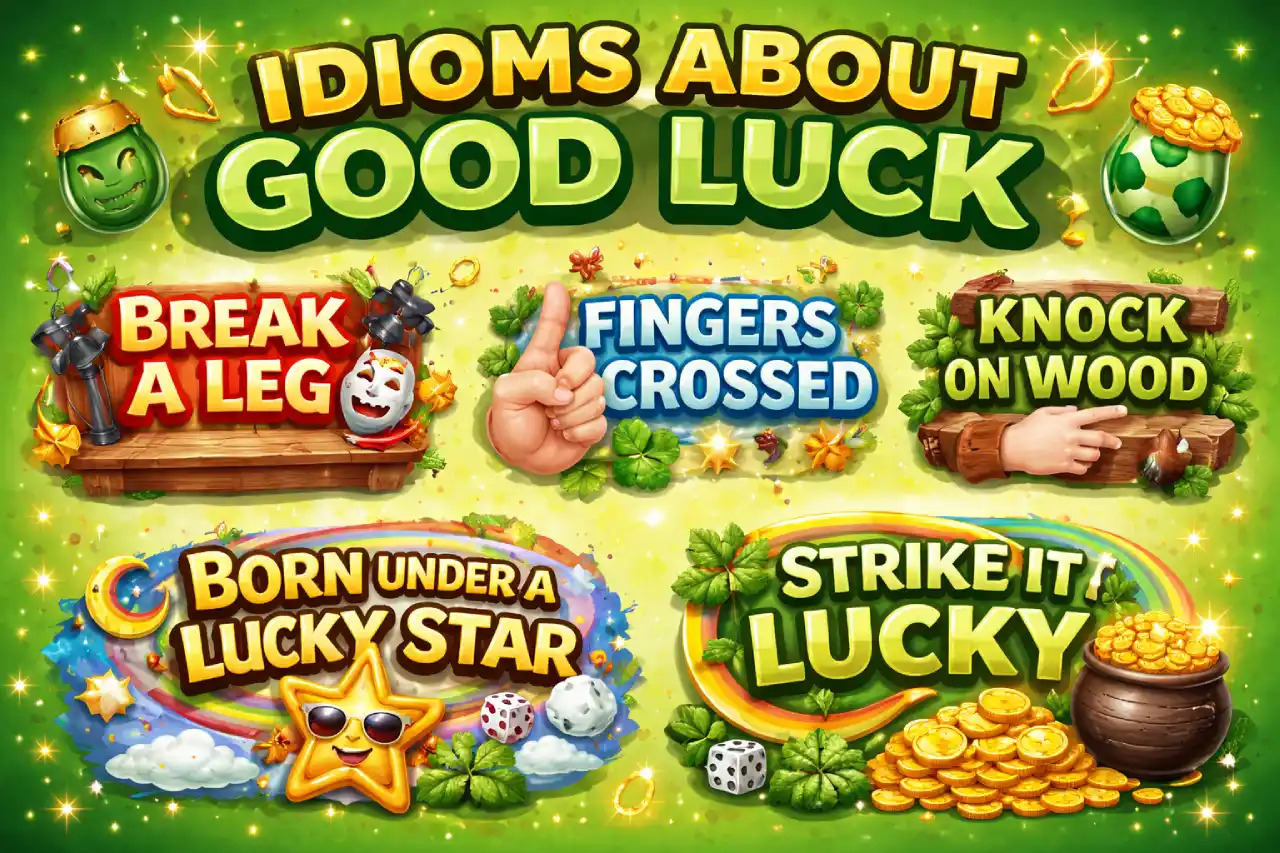
When someone is about to start something important—an exam, a new job, a performance, or even a big presentation—we often wish them good luck. But in English, people rarely stop at those two simple words. Instead, the language is full of colorful idioms and expressions related to luck, fortune, and success.
Some of these phrases come from theater traditions, others from history, sports, or everyday life. What makes them interesting is that many of them don’t literally mention “luck,” yet everyone understands the positive wish behind them.
In this article, I’ve gathered 33 idioms about good luck that people commonly use in conversations, writing, and everyday encouragement. Each idiom includes a clear meaning, a short one-line example sentence, similar expressions, and a couple of additional notes that help explain how the phrase is typically used.
If you enjoy learning practical English expressions, these idioms will definitely add some variety to the way you wish someone success.
1. Break a Leg
Meaning: A way to wish someone good luck, especially before a performance.
In a Sentence: Before the play started, the director told the actors to break a leg.
Other Ways to Say: Good luck, give it your best shot.
Where It’s Often Used: Theater, music performances, and public speaking.
Quick Insight: The phrase sounds negative but is traditionally meant as encouragement.
2. Fingers Crossed

Meaning: Hoping something good will happen.
In a Sentence: I have my fingers crossed for your interview tomorrow.
Other Ways to Say: Hoping for the best, wishing you luck.
Where It’s Often Used: Informal conversations.
Quick Insight: Crossing fingers has long been associated with hope and luck.
3. Knock on Wood

Meaning: Said to avoid bad luck after mentioning something positive.
In a Sentence: I haven’t been sick all year, knock on wood.
Other Ways to Say: Hope it stays that way.
Where It’s Often Used: Casual conversations.
Quick Insight: The phrase comes from old superstitions about protective spirits in trees.
4. Born Under a Lucky Star

Meaning: Naturally fortunate in life.
In a Sentence: She seems to be born under a lucky star with all her success.
Other Ways to Say: Naturally lucky, blessed with fortune.
Where It’s Often Used: Describing fortunate people.
Quick Insight: The phrase has roots in astrology.
5. Strike It Lucky

Meaning: To suddenly experience good fortune.
In a Sentence: He struck it lucky and found a great job quickly.
Other Ways to Say: Get lucky, hit the jackpot.
Where It’s Often Used: Success stories.
Quick Insight: Often used when luck appears unexpectedly.
6. The Luck of the Draw
Meaning: A situation determined by chance.
In a Sentence: Getting that easy question in the exam was just the luck of the draw.
Other Ways to Say: Pure chance, random outcome.
Where It’s Often Used: Competitions or random selections.
Quick Insight: Draw refers to picking something randomly.
7. A Lucky Break

Meaning: An unexpected opportunity.
In a Sentence: Getting that internship was a lucky break for her career.
Other Ways to Say: Chance opportunity, fortunate moment.
Where It’s Often Used: Career or life opportunities.
Quick Insight: A break can mean a sudden advantage.
8. Push Your Luck
Meaning: Risk losing good fortune by taking too many chances.
In a Sentence: You already won twice; don’t push your luck.
Other Ways to Say: Take unnecessary risks.
Where It’s Often Used: Warnings.
Quick Insight: Luck can disappear if overused.
9. Down on Your Luck
Meaning: Experiencing a period of bad luck.
In a Sentence: After losing his job, he felt down on his luck.
Other Ways to Say: Facing hard times.
Where It’s Often Used: Difficult life situations.
Quick Insight: The phrase highlights temporary misfortune.
10. Beginner’s Luck

Meaning: When someone succeeds the first time they try something.
In a Sentence: She won the game on her first attempt—it must be beginner’s luck.
Other Ways to Say: First-time fortune.
Where It’s Often Used: Games and competitions.
Quick Insight: Often said jokingly.
11. As Luck Would Have It
Meaning: Something happened by chance, often positively.
In a Sentence: As luck would have it, I met my friend at the airport.
Other Ways to Say: Coincidentally, by chance.
Where It’s Often Used: Storytelling.
Quick Insight: Used to introduce surprising events.
12. Lucky Charm
Meaning: An object believed to bring good fortune.
In a Sentence: She carries a small coin as her lucky charm.
Other Ways to Say: Good luck token.
Where It’s Often Used: Personal habits and traditions.
Quick Insight: Many cultures believe in lucky objects.
13. Lady Luck Smiles

Meaning: Fortune favors someone.
In a Sentence: Lady Luck smiled on the team during the final match.
Other Ways to Say: Fortune favors you.
Where It’s Often Used: Sports and competitions.
Quick Insight: Luck is personified as a woman in folklore.
14. Hit the Jackpot
Meaning: Achieve great success or fortune.
In a Sentence: The company hit the jackpot with its new product.
Other Ways to Say: Strike it rich.
Where It’s Often Used: Business or gambling contexts.
Quick Insight: Jackpot refers to the highest prize in gambling.
15. Get a Lucky Break
Meaning: Receive a fortunate opportunity.
In a Sentence: He got a lucky break when the manager noticed his work.
Other Ways to Say: Catch a lucky chance.
Where It’s Often Used: Career advancement.
Quick Insight: Opportunity often leads to success.
16. Ride a Wave of Luck

Meaning: Experience continuous good fortune.
In a Sentence: The team rode a wave of luck throughout the tournament.
Other Ways to Say: Series of successes.
Where It’s Often Used: Sports or competitions.
Quick Insight: Waves symbolize momentum.
17. Luck Is on Your Side
Meaning: Fortune is helping you succeed.
In a Sentence: With those results, luck is clearly on your side.
Other Ways to Say: Fortune favors you.
Where It’s Often Used: Encouragement.
Quick Insight: Luck is imagined as support.
18. Golden Opportunity
Meaning: A rare and valuable chance.
In a Sentence: The scholarship was a golden opportunity for her.
Other Ways to Say: Great chance.
Where It’s Often Used: Education and career.
Quick Insight: Gold symbolizes value.
19. Fortunate Turn of Events

Meaning: A positive change in circumstances.
In a Sentence: The meeting turned into a fortunate turn of events.
Other Ways to Say: Positive twist.
Where It’s Often Used: Storytelling.
Quick Insight: Turn suggests sudden change.
20. Lucky Streak
Meaning: A period of repeated success.
In a Sentence: He’s on a lucky streak this week.
Other Ways to Say: Winning streak.
Where It’s Often Used: Games or sports.
Quick Insight: Streak refers to continuous success.
21. Fortune Smiles
Meaning: Good luck appears unexpectedly.
In a Sentence: Fortune smiled when the project received funding.
Other Ways to Say: Good luck arrives.
Where It’s Often Used: Formal or literary writing.
Quick Insight: Fortune is often personified.
22. Chance of a Lifetime
Meaning: A rare opportunity.
In a Sentence: Traveling abroad was the chance of a lifetime.
Other Ways to Say: Rare opportunity.
Where It’s Often Used: Life-changing situations.
Quick Insight: Such chances may appear only once.
23. A Stroke of Luck
Meaning: Sudden good fortune.
In a Sentence: Finding the missing key was a stroke of luck.
Other Ways to Say: Lucky moment.
Where It’s Often Used: Unexpected situations.
Quick Insight: Stroke suggests sudden impact.
24. Land on Your Feet
Meaning: Recover well from difficulties.
In a Sentence: Even after losing his job, he landed on his feet.
Other Ways to Say: Bounce back successfully.
Where It’s Often Used: Life challenges.
Quick Insight: Cats always land safely, inspiring the phrase.
25. Lucky Day
Meaning: A day when things go particularly well.
In a Sentence: Winning the raffle made it my lucky day.
Other Ways to Say: Fortunate day.
Where It’s Often Used: Casual conversation.
Quick Insight: Often said jokingly.
26. Good Fortune

Meaning: Positive luck or success.
In a Sentence: She had the good fortune of meeting a helpful mentor.
Other Ways to Say: Blessing, luck.
Where It’s Often Used: Formal contexts.
Quick Insight: Fortune refers to destiny or luck.
27. Lucky Shot
Meaning: Success achieved partly by chance.
In a Sentence: His winning goal was a lucky shot.
Other Ways to Say: Chance success.
Where It’s Often Used: Sports.
Quick Insight: Sometimes skill and luck mix together.
28. Fortunate Discovery
Meaning: Finding something valuable unexpectedly.
In a Sentence: The scientist made a fortunate discovery.
Other Ways to Say: Lucky find.
Where It’s Often Used: Science or exploration.
Quick Insight: Many discoveries happen accidentally.
29. Fortune Favors the Bold
Meaning: Brave actions often lead to success.
In a Sentence: She started her business believing fortune favors the bold.
Other Ways to Say: Courage leads to success.
Where It’s Often Used: Motivation.
Quick Insight: The phrase has ancient Latin origins.
30. Good Luck Charm
Meaning: An item believed to bring luck.
In a Sentence: He wears the bracelet as a good luck charm.
Other Ways to Say: Lucky token.
Where It’s Often Used: Personal traditions.
Quick Insight: Many athletes keep lucky items.
31. Touch of Luck
Meaning: A small amount of luck helping success.
In a Sentence: With a touch of luck, the team won the match.
Other Ways to Say: Bit of luck.
Where It’s Often Used: Sports or competition.
Quick Insight: Luck sometimes tips the balance.
32. Fortune Knocks
Meaning: Opportunity appears unexpectedly.
In a Sentence: When fortune knocks, be ready to open the door.
Other Ways to Say: Opportunity arrives.
Where It’s Often Used: Advice or motivation.
Quick Insight: Opportunity is imagined as someone knocking.
33. Catch a Lucky Break
Meaning: Experience a fortunate opportunity.
In a Sentence: She caught a lucky break when her article went viral.
Other Ways to Say: Get a fortunate chance.
Where It’s Often Used: Career success.
Quick Insight: Break often refers to opportunity.
Final Thoughts
Idioms about good luck are more than just expressions—they reflect how people talk about opportunity, chance, and hope in everyday life. From encouraging phrases like “break a leg” to descriptive expressions like “born under a lucky star,” these idioms help us communicate support, optimism, and celebration.
Personally, I find that learning idioms like these makes conversations more natural and engaging, especially when wishing someone success before an important moment.
If you found this article informative, feel free to check out our other articles as well.