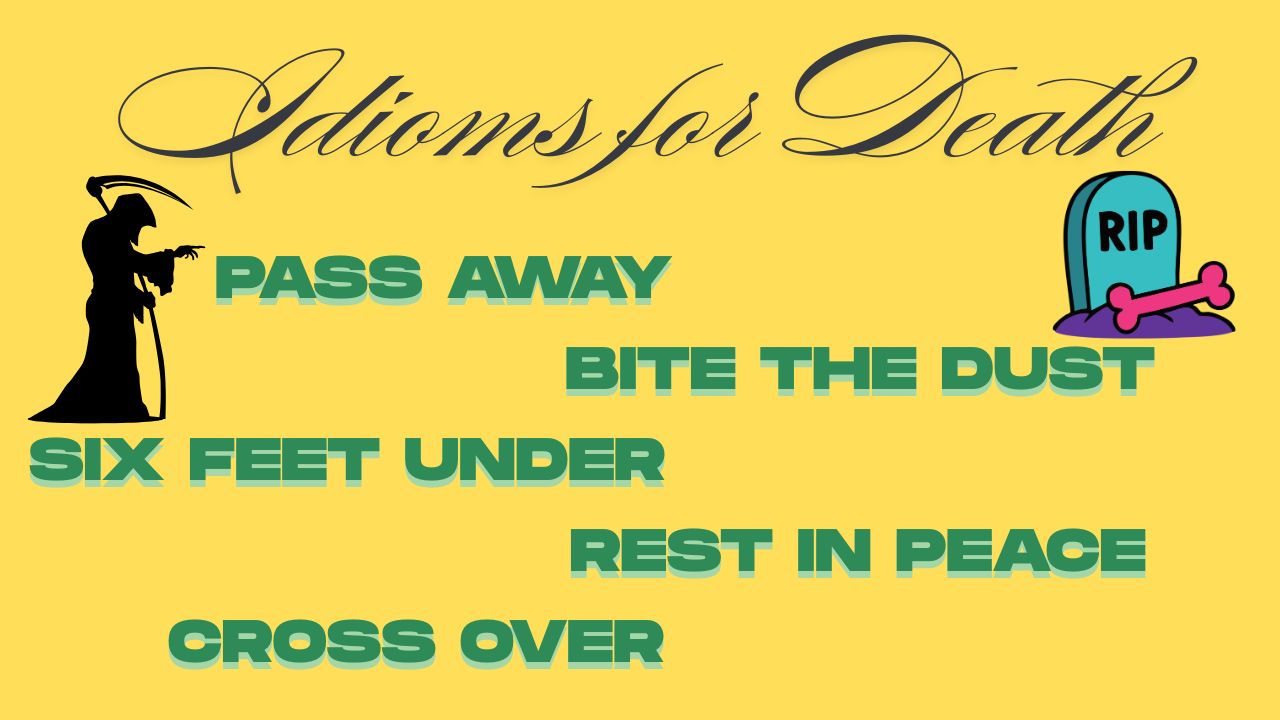
Death is one of the most serious and sensitive topics in any language. Yet English has developed many idioms to refer to death in softer, indirect, humorous, or symbolic ways. Instead of saying “someone died,” people often choose expressions that feel gentler, poetic, or conversational.
If you are looking for a direct answer, here it is: idioms for death are figurative expressions used to describe dying or being dead without stating it directly.
In this article, I’ve gathered 50 idioms for death. Each entry includes a clear meaning, a simple one-line sentence example, alternative ways to say it, and two additional points to help you understand when and how to use each expression naturally and respectfully.
1. Pass Away

Meaning: To die in a gentle or respectful way.
In a Sentence: His grandfather passed away peacefully at home.
Other Ways to Say: Depart this life, leave us
When to Use It: Formal or respectful conversations
Tone or Context: Gentle and respectful
2. Kick the Bucket

Meaning: To die (informal or humorous).
In a Sentence: He joked about kicking the bucket one day.
Other Ways to Say: Bite the dust
When to Use It: Casual or humorous contexts
Tone or Context: Informal
3. Bite the Dust

Meaning: To die or fail dramatically.
In a Sentence: The villain finally bit the dust.
Other Ways to Say: Meet one’s end
When to Use It: Stories or movies
Tone or Context: Dramatic
4. Meet One’s Maker

Meaning: To die and face God.
In a Sentence: He met his maker after a long illness.
Other Ways to Say: Go to heaven
When to Use It: Religious context
Tone or Context: Formal
5. Six Feet Under

Meaning: Buried in the ground.
In a Sentence: He joked about being six feet under.
Other Ways to Say: Buried
When to Use It: Casual speech
Tone or Context: Informal
6. Depart This Life

Meaning: To die.
In a Sentence: She departed this life quietly.
Other Ways to Say: Pass away
When to Use It: Formal writing
Tone or Context: Respectful
7. Give Up the Ghost

Meaning: To die or stop functioning.
In a Sentence: The old man gave up the ghost peacefully.
Other Ways to Say: Pass on
When to Use It: Storytelling
Tone or Context: Slightly old-fashioned
8. Go to One’s Final Rest

Meaning: To die peacefully.
In a Sentence: He went to his final rest at home.
Other Ways to Say: Rest in peace
When to Use It: Obituaries
Tone or Context: Formal
9. Rest in Peace

Meaning: A wish for someone who has died.
In a Sentence: May she rest in peace.
Other Ways to Say: Sleep peacefully
When to Use It: Memorial context
Tone or Context: Respectful
10. Cross Over

Meaning: To move from life to death.
In a Sentence: She crossed over surrounded by family.
Other Ways to Say: Pass on
When to Use It: Spiritual context
Tone or Context: Gentle
11. Go to a Better Place
Meaning: To die and enter heaven.
In a Sentence: People said he went to a better place.
Other Ways to Say: Be at peace
When to Use It: Comforting others
Tone or Context: Comforting
12. Fall Asleep Forever
Meaning: To die peacefully.
In a Sentence: She fell asleep forever in her chair.
Other Ways to Say: Eternal sleep
When to Use It: Poetic tone
Tone or Context: Soft
13. Breathe One’s Last
Meaning: To die.
In a Sentence: He breathed his last at midnight.
Other Ways to Say: Pass away
When to Use It: Formal writing
Tone or Context: Serious
14. Meet One’s End
Meaning: To die.
In a Sentence: The hero met his end bravely.
Other Ways to Say: Die
When to Use It: Stories
Tone or Context: Neutral
15. Go to Glory
Meaning: To die and go to heaven.
In a Sentence: She went to glory peacefully.
Other Ways to Say: Enter heaven
When to Use It: Religious talk
Tone or Context: Spiritual
16. Be No More

Meaning: To no longer be alive.
In a Sentence: The king was no more.
Other Ways to Say: Deceased
When to Use It: Literary writing
Tone or Context: Formal
17. Lay Down One’s Life
Meaning: To die, often for a cause.
In a Sentence: He laid down his life for his country.
Other Ways to Say: Sacrifice life
When to Use It: Heroic situations
Tone or Context: Respectful
18. Go the Way of All Flesh
Meaning: To die (biblical phrase).
In a Sentence: We all go the way of all flesh someday.
Other Ways to Say: Face mortality
When to Use It: Philosophical talk
Tone or Context: Reflective
19. Shuffle Off This Mortal Coil
Meaning: To die (literary phrase).
In a Sentence: He shuffled off this mortal coil.
Other Ways to Say: Leave this world
When to Use It: Literary reference
Tone or Context: Poetic
20. Drop Dead
Meaning: To die suddenly (can be rude).
In a Sentence: He nearly dropped dead from shock.
Other Ways to Say: Collapse
When to Use It: Informal context
Tone or Context: Casual
21. Be Called Home
Meaning: To die and go to heaven.
In a Sentence: She was called home last night.
Other Ways to Say: Return to God
When to Use It: Religious comfort
Tone or Context: Soft
22. Slip Away
Meaning: To die quietly.
In a Sentence: He slipped away in his sleep.
Other Ways to Say: Pass peacefully
When to Use It: Gentle reference
Tone or Context: Respectful
23. Go to the Great Beyond

Meaning: To die and enter the afterlife.
In a Sentence: He went to the great beyond.
Other Ways to Say: Enter eternity
When to Use It: Casual storytelling
Tone or Context: Neutral
24. Take One’s Last Breath
Meaning: To die.
In a Sentence: She took her last breath at dawn.
Other Ways to Say: Breathe one’s last
When to Use It: Formal context
Tone or Context: Serious
25. Turn Up One’s Toes
Meaning: To die (informal).
In a Sentence: He joked about turning up his toes someday.
Other Ways to Say: Kick the bucket
When to Use It: Humor
Tone or Context: Informal
26. Cash in One’s Chips

Meaning: To die (informal expression).
In a Sentence: The old gambler joked about cashing in his chips one day.
Other Ways to Say: Kick the bucket, meet one’s end
When to Use It: Casual or humorous situations
Tone or Context: Informal
27. Go Belly Up
Meaning: To die or fail completely.
In a Sentence: The character went belly up at the end of the film.
Other Ways to Say: Collapse, fail
When to Use It: Informal conversations
Tone or Context: Casual
28. Be Pushing Up Daisies
Meaning: To be dead and buried.
In a Sentence: He joked that he would be pushing up daisies soon.
Other Ways to Say: Six feet under
When to Use It: Light or humorous talk
Tone or Context: Informal
29. Bite the Big One

Meaning: To die suddenly (slang).
In a Sentence: The villain finally bit the big one.
Other Ways to Say: Bite the dust
When to Use It: Movies or dramatic storytelling
Tone or Context: Slang
30. Croak
Meaning: To die (very informal).
In a Sentence: He joked that he would croak before retirement.
Other Ways to Say: Kick the bucket
When to Use It: Very casual speech
Tone or Context: Informal
31. Go Under
Meaning: To die or be defeated.
In a Sentence: The hero refused to go under without a fight.
Other Ways to Say: Fall, collapse
When to Use It: Dramatic context
Tone or Context: Neutral
32. Check Out
Meaning: To die (informal phrase).
In a Sentence: The old man checked out peacefully.
Other Ways to Say: Pass away
When to Use It: Casual talk
Tone or Context: Informal
33. Take the Long Sleep

Meaning: To die permanently.
In a Sentence: He took the long sleep after his illness.
Other Ways to Say: Eternal rest
When to Use It: Literary writing
Tone or Context: Poetic
34. Meet One’s Fate
Meaning: To die as destined.
In a Sentence: The warrior met his fate bravely.
Other Ways to Say: Meet one’s end
When to Use It: Stories or historical writing
Tone or Context: Serious
35. Be Gone
Meaning: To no longer be alive.
In a Sentence: By morning, she was gone.
Other Ways to Say: Passed away
When to Use It: Gentle reference
Tone or Context: Soft
36. Go West

Meaning: To die (British informal).
In a Sentence: The soldier went west in battle.
Other Ways to Say: Meet one’s end
When to Use It: Historical context
Tone or Context: Informal
37. Buy the Farm
Meaning: To die unexpectedly (slang).
In a Sentence: The pilot nearly bought the farm.
Other Ways to Say: Kick the bucket
When to Use It: Casual speech
Tone or Context: Slang
38. Go Toes Up
Meaning: To die (humorous expression).
In a Sentence: The old dog finally went toes up.
Other Ways to Say: Croak
When to Use It: Informal talk
Tone or Context: Light
39. Pass into Eternity
Meaning: To die and enter the afterlife.
In a Sentence: She passed into eternity surrounded by loved ones.
Other Ways to Say: Enter eternal rest
When to Use It: Formal writing
Tone or Context: Respectful
40. Enter Eternal Rest
Meaning: To die peacefully.
In a Sentence: He entered eternal rest last night.
Other Ways to Say: Rest in peace
When to Use It: Obituaries
Tone or Context: Formal
41. Go to One’s Reward
Meaning: To die and receive heavenly reward.
In a Sentence: She went to her reward after a life of service.
Other Ways to Say: Meet one’s maker
When to Use It: Religious context
Tone or Context: Spiritual
42. Pay the Ultimate Price
Meaning: To die, often for a cause.
In a Sentence: The soldier paid the ultimate price.
Other Ways to Say: Lay down one’s life
When to Use It: Military or sacrifice context
Tone or Context: Serious
43. Close One’s Eyes Forever

Meaning: To die peacefully.
In a Sentence: She closed her eyes forever at dawn.
Other Ways to Say: Pass away
When to Use It: Literary writing
Tone or Context: Gentle
44. Be Laid to Rest
Meaning: To be buried after death.
In a Sentence: He was laid to rest beside his family.
Other Ways to Say: Buried
When to Use It: Funeral context
Tone or Context: Respectful
45. Go to Sleep for Good
Meaning: To die permanently.
In a Sentence: The old man went to sleep for good.
Other Ways to Say: Eternal sleep
When to Use It: Soft explanation
Tone or Context: Gentle
46. Take the Final Journey

Meaning: To die.
In a Sentence: She took her final journey peacefully.
Other Ways to Say: Depart this life
When to Use It: Formal writing
Tone or Context: Respectful
47. Exit This World
Meaning: To die.
In a Sentence: He exited this world quietly.
Other Ways to Say: Pass away
When to Use It: Literary context
Tone or Context: Neutral
48. Be Taken
Meaning: To die suddenly or unexpectedly.
In a Sentence: He was taken too soon.
Other Ways to Say: Passed away
When to Use It: Expressing grief
Tone or Context: Emotional
49. Go Beyond the Veil

Meaning: To enter the afterlife.
In a Sentence: She went beyond the veil last winter.
Other Ways to Say: Cross over
When to Use It: Spiritual talk
Tone or Context: Poetic
50. Depart for Good
Meaning: To die permanently.
In a Sentence: He departed for good after a long illness.
Other Ways to Say: Leave this world
When to Use It: General reference
Tone or Context: Neutral