Anger is one of the strongest emotions we experience, and English has no shortage of colorful ways to describe it. Instead of simply saying “I’m angry,” we often use idioms that paint a clearer and more dramatic picture of how we feel.
If you’re looking for a direct answer, here it is: idioms for anger are expressions that describe frustration, rage, irritation, or outrage in a figurative way rather than a literal one. They make conversations more expressive and writing more engaging.
In this article, I’ve put together 30 commonly used idioms for anger. Each one includes a clear meaning, a one-line sentence example, alternative ways to say it, plus two additional points to help you understand when and how to use it naturally.
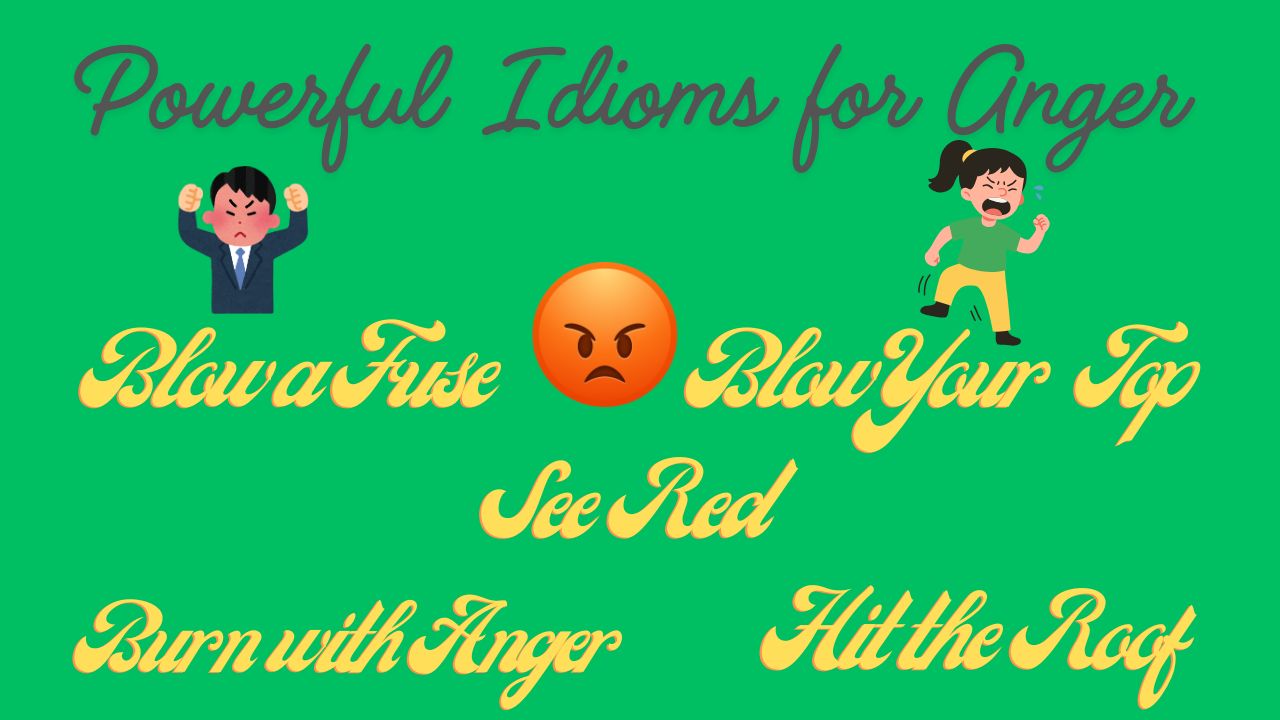
1. Blow a Fuse
Meaning: To suddenly become very angry
In a Sentence: He blew a fuse when he saw the broken window.
Other Ways to Say: Lose your temper, snap
When to Use It: Sudden outbursts of anger
Tone or Context: Informal
2. Hit the Roof

Meaning: To become extremely angry
In a Sentence: My dad hit the roof when I missed curfew.
Other Ways to Say: Explode with anger, lose it
When to Use It: Strong reactions
Tone or Context: Dramatic
3. See Red

Meaning: To feel intense anger
In a Sentence: She saw red when she heard the unfair comment.
Other Ways to Say: Become furious, feel enraged
When to Use It: Immediate anger
Tone or Context: Emotional
4. Fly Off the Handle

Meaning: To react angrily without warning
In a Sentence: He flew off the handle over a small mistake.
Other Ways to Say: Overreact, lose control
When to Use It: Unexpected reactions
Tone or Context: Informal
5. Blow Your Top

Meaning: To suddenly become furious
In a Sentence: She blew her top during the meeting.
Other Ways to Say: Explode, lose your cool
When to Use It: Workplace or personal conflicts
Tone or Context: Casual
6. Lose Your Temper

Meaning: To become angry
In a Sentence: I lost my temper after hearing the repeated complaints.
Other Ways to Say: Get angry, lose control
When to Use It: Everyday irritation
Tone or Context: Neutral
7. Foaming at the Mouth

Meaning: Extremely angry
In a Sentence: He was foaming at the mouth after the argument.
Other Ways to Say: Furious, enraged
When to Use It: Extreme anger
Tone or Context: Strong
8. Burn with Anger

Meaning: To feel deep anger
In a Sentence: She burned with anger over the injustice.
Other Ways to Say: Seethe, rage
When to Use It: Moral or emotional anger
Tone or Context: Serious
9. Go Ballistic

Meaning: To react with uncontrolled anger
In a Sentence: He went ballistic when he saw the damage.
Other Ways to Say: Explode, lose control
When to Use It: Sudden reactions
Tone or Context: Informal
10. Be Up in Arms

Meaning: To be angry and ready to protest
In a Sentence: Residents were up in arms about the new policy.
Other Ways to Say: Outraged, protesting
When to Use It: Public anger
Tone or Context: Formal or semi-formal
11. Have a Short Fuse
Meaning: To get angry easily
In a Sentence: He has a short fuse when he is stressed.
Other Ways to Say: Easily irritated, quick-tempered
When to Use It: Personality traits
Tone or Context: Casual
12. Make Someone’s Blood Boil
Meaning: To make someone very angry
In a Sentence: The unfair treatment made her blood boil.
Other Ways to Say: Infuriate, enrage
When to Use It: Describing triggers
Tone or Context: Emotional
13. Storm Out

Meaning: To leave angrily
In a Sentence: She stormed out of the room after the argument.
Other Ways to Say: Walk out angrily
When to Use It: Arguments
Tone or Context: Dramatic
14. Bite Someone’s Head Off
Meaning: To speak angrily to someone
In a Sentence: He bit my head off for asking a simple question.
Other Ways to Say: Snap at, scold harshly
When to Use It: Verbal anger
Tone or Context: Informal
15. Go Through the Roof
Meaning: To rise suddenly in anger
In a Sentence: Her anger went through the roof when she heard the news.
Other Ways to Say: Escalate quickly
When to Use It: Sudden strong reaction
Tone or Context: Casual
16. Throw a Fit

Meaning: To react angrily in a childish way
In a Sentence: He threw a fit over the minor delay.
Other Ways to Say: Have a tantrum
When to Use It: Immature reactions
Tone or Context: Informal
17. See Sparks
Meaning: To feel intense anger
In a Sentence: I saw sparks when I heard the false accusation.
Other Ways to Say: Feel furious
When to Use It: Heated arguments
Tone or Context: Expressive
18. Boil Over
Meaning: When anger suddenly becomes uncontrollable
In a Sentence: Tension boiled over during the discussion.
Other Ways to Say: Explode, erupt
When to Use It: Gradual build-up
Tone or Context: Neutral
19. Be Furious

Meaning: Extremely angry
In a Sentence: She was furious about the mistake.
Other Ways to Say: Enraged, livid
When to Use It: Strong anger
Tone or Context: Formal
20. Be Livid
Meaning: Very angry
In a Sentence: He was livid after being blamed unfairly.
Other Ways to Say: Furious, outraged
When to Use It: Serious situations
Tone or Context: Strong
21. Get Worked Up
Meaning: To become overly angry or upset
In a Sentence: Don’t get worked up over small issues.
Other Ways to Say: Agitated, upset
When to Use It: Everyday frustration
Tone or Context: Casual
22. Go on a Rampage
Meaning: To act violently in anger
In a Sentence: He went on a rampage after losing the game.
Other Ways to Say: Act out angrily
When to Use It: Extreme reactions
Tone or Context: Dramatic
23. Snap

Meaning: To suddenly lose control emotionally
In a Sentence: She snapped after being criticized repeatedly.
Other Ways to Say: Break down, lose it
When to Use It: Stress-related anger
Tone or Context: Informal
24. Be in a Rage
Meaning: To be extremely angry
In a Sentence: He was in a rage after the argument.
Other Ways to Say: Furious, enraged
When to Use It: Serious conflicts
Tone or Context: Strong
25. Get Hot Under the Collar
Meaning: To feel annoyed or angry
In a Sentence: He got hot under the collar during the debate.
Other Ways to Say: Irritated, upset
When to Use It: Heated discussions
Tone or Context: Informal
26. Flip Your Lid

Meaning: To suddenly lose control
In a Sentence: She flipped her lid when she saw the mess.
Other Ways to Say: Lose it, explode
When to Use It: Unexpected anger
Tone or Context: Casual
27. Blow a Gasket
Meaning: To become extremely angry
In a Sentence: He blew a gasket over the missed deadline.
Other Ways to Say: Explode with anger
When to Use It: Work-related stress
Tone or Context: Informal
28. Be Seeing Stars
Meaning: To be overwhelmed with anger
In a Sentence: I was seeing stars after hearing that comment.
Other Ways to Say: Overcome with rage
When to Use It: Emotional shock
Tone or Context: Expressive
29. Have Steam Coming Out of Your Ears
Meaning: To be visibly angry
In a Sentence: He looked like he had steam coming out of his ears.
Other Ways to Say: Visibly furious
When to Use It: Describing appearance
Tone or Context: Humorous
30. Blow Up
Meaning: To suddenly become angry
In a Sentence: She blew up over the misunderstanding.
Other Ways to Say: Explode, lose temper
When to Use It: Sudden conflict
Tone or Context: Informal
Conclusion
Idioms for anger make language more expressive and engaging. Instead of repeating “angry” again and again, these phrases help describe different levels and types of frustration, rage, and irritation. I personally find that using the right idiom can make a sentence feel more vivid and real.
Understanding these expressions also helps in conversations, books, movies, and workplace discussions. The more you practice them, the more natural they will sound.
If you found this article informative, feel free to check out our other articles as well.