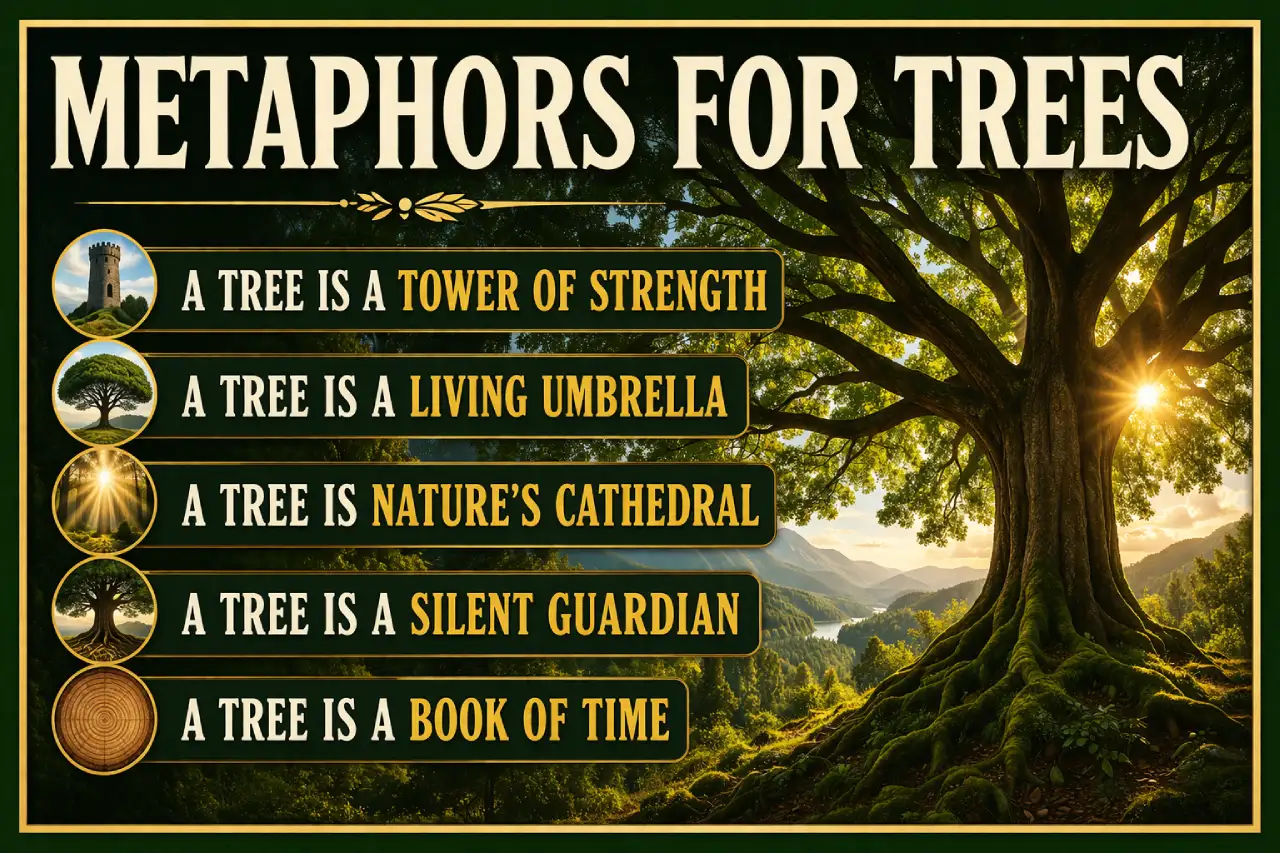
Trees are some of the richest symbols in the English language. They can represent strength, patience, wisdom, protection, family, healing, and steady growth. That is why metaphors for trees appear so often in poetry, storytelling, speeches, and everyday writing.
In simple terms, a tree metaphor compares a person, feeling, situation, or idea to a tree in order to make the description more vivid. A tree can stand for someone deeply rooted in values, a family with many branches, or a life that keeps growing through every season.
In this guide, you’ll find 50 metaphors for trees, each written in a reader-friendly format so the meanings are easy to understand and use naturally in your own writing.
1. A Tree Is a Tower of Strength
Meaning: A tree represents stability, endurance, and quiet power.
In a Sentence: Even during the hardest years of her life, she stood like a tower of strength for everyone around her.
Other Ways to Say: A pillar of strength, a steady force, an unshakable presence
Why It Works: Trees survive storms, heat, and time, so they naturally symbolize resilience.
Best Used For: Describing strong people, emotional resilience, or dependable leadership.
2. A Tree Is a Living Umbrella
Meaning: A tree symbolizes shelter, protection, and comfort.
In a Sentence: The old oak became a living umbrella for children playing in the summer sun.
Other Ways to Say: A natural shelter, a shade giver, a protective cover
Why It Works: Trees literally provide shade, which makes this metaphor easy to picture.
Best Used For: Writing about care, safety, parenting, or comfort.
3. A Tree Is Nature’s Cathedral
Meaning: A tree represents beauty, peace, and something spiritually uplifting.
In a Sentence: Walking through the redwoods felt like entering nature’s cathedral.
Other Ways to Say: A sacred shelter, a woodland temple, a holy canopy
Why It Works: Tall trees can feel grand and reverent, almost like sacred architecture.
Best Used For: Nature writing, reflective essays, and poetic descriptions.
4. A Tree Is a Silent Guardian
Meaning: A tree symbolizes quiet protection and faithful presence.
In a Sentence: The pine stood beside the farmhouse like a silent guardian through every season.
Other Ways to Say: A watchful protector, a gentle sentinel, a quiet defender
Why It Works: Trees stay in place for years, creating a sense of loyal watchfulness.
Best Used For: Describing protectors, homes, or lasting support.
5. A Tree Is a Book of Time
Meaning: A tree represents history, memory, and the passing of years.
In a Sentence: That ancient cedar was a book of time, holding decades in its rings.
Other Ways to Say: A living history, a natural record, a witness to time
Why It Works: Tree rings are real markers of age, so the metaphor feels grounded and meaningful.
Best Used For: Writing about age, memory, family legacy, or history.
6. A Tree Is a Family Map
Meaning: A tree symbolizes family connections and generations.
In a Sentence: Their family felt like a great tree, with roots in the past and branches reaching into the future.
Other Ways to Say: A family network, a generational web, a branching legacy
Why It Works: The structure of a tree mirrors how families grow and expand.
Best Used For: Family writing, ancestry topics, and emotional reflections.
7. A Tree Is an Anchor in the Earth
Meaning: A tree represents grounding, steadiness, and security.
In a Sentence: In moments of panic, her father was always an anchor in the earth.
Other Ways to Say: A grounding force, a stable center, a rooted support
Why It Works: Deep roots make trees a natural symbol of being grounded.
Best Used For: Emotional writing, character descriptions, and personal growth pieces.
8. A Tree Is a Ladder to the Sky
Meaning: A tree symbolizes aspiration, growth, and upward movement.
In a Sentence: To the young boy, the giant maple looked like a ladder to the sky.
Other Ways to Say: A path upward, a climb toward dreams, a natural staircase
Why It Works: Trees physically rise upward, making them a strong symbol of ambition.
Best Used For: Inspirational writing, childhood imagery, and hopeful descriptions.
9. A Tree Is a Green Giant
Meaning: A tree represents impressive size, power, and majesty.
In a Sentence: The sequoia towered above the trail like a green giant from another world.
Other Ways to Say: A forest giant, a natural titan, a towering life-form
Why It Works: Huge trees can feel larger than life.
Best Used For: Descriptive writing and dramatic nature scenes.
10. A Tree Is a Patient Teacher
Meaning: A tree symbolizes wisdom, calmness, and lessons learned slowly over time.
In a Sentence: The old elm felt like a patient teacher, reminding us that growth cannot be rushed.
Other Ways to Say: A quiet mentor, a wise elder, a natural guide
Why It Works: Trees grow slowly and steadily, which mirrors lasting wisdom.
Best Used For: Reflective writing, self-improvement content, and thoughtful essays.
11. A Tree Is a Shelter of Memories
Meaning: A tree represents a place tied to important emotions and experiences.
In a Sentence: The mango tree in the yard became a shelter of memories from our childhood.
Other Ways to Say: A home for memories, a keeper of moments, a memory marker
Why It Works: Many people connect trees with childhood, home, and routine.
Best Used For: Nostalgic writing and personal storytelling.
12. A Tree Is a Bridge Between Earth and Sky
Meaning: A tree symbolizes connection between the grounded and the elevated.
In a Sentence: The willow stood like a bridge between earth and sky, rooted below and reaching above.
Other Ways to Say: A link between worlds, a living connector, a natural bridge
Why It Works: Trees visually connect soil and sky in one living form.
Best Used For: Philosophical writing and poetic descriptions.
13. A Tree Is a Soldier in the Storm
Meaning: A tree represents courage and endurance in difficult times.
In a Sentence: He faced criticism like a soldier in the storm, bending but never breaking.
Other Ways to Say: A brave survivor, a steadfast fighter, a weathered warrior
Why It Works: Trees often survive harsh weather, making them ideal symbols of courage.
Best Used For: Motivational writing and descriptions of resilience.
14. A Tree Is a Crown of Life
Meaning: A tree symbolizes beauty, abundance, and full vitality.
In a Sentence: In spring, the blooming cherry tree became a crown of life in the garden.
Other Ways to Say: A burst of life, a symbol of abundance, a living crown
Why It Works: A full tree canopy looks rich, layered, and full of energy.
Best Used For: Seasonal writing and garden-related descriptions.
15. A Tree Is a Whispering Friend
Meaning: A tree represents calm companionship and quiet comfort.
In a Sentence: On lonely afternoons, the birch outside her window felt like a whispering friend.
Other Ways to Say: A quiet companion, a gentle presence, a peaceful friend
Why It Works: The sound of leaves in the wind feels soft and intimate.
Best Used For: Emotional writing and peaceful scenes.
16. A Tree Is a Fortress of Roots
Meaning: A tree symbolizes deep stability and inner strength.
In a Sentence: Their traditions acted like a fortress of roots, keeping the family grounded.
Other Ways to Say: A rooted foundation, a deep base, a stable core
Why It Works: A tree’s strength starts below the surface, just like real character often does.
Best Used For: Family, culture, and identity writing.
17. A Tree Is a Lamp of Hope
Meaning: A tree symbolizes renewal and the promise of life.
In a Sentence: After the wildfire, the first new sapling looked like a lamp of hope.
Other Ways to Say: A sign of renewal, a living promise, a spark of life
Why It Works: New growth after loss is deeply symbolic.
Best Used For: Recovery, healing, and hopeful storytelling.
18. A Tree Is a Keeper of Secrets
Meaning: A tree represents privacy, stillness, and silent witnessing.
In a Sentence: That old tree by the lake was a keeper of secrets, listening to every whispered confession.
Other Ways to Say: A silent witness, a quiet listener, a secret holder
Why It Works: Trees are often present in private and reflective moments.
Best Used For: Fiction, memoir, and emotional scenes.
19. A Tree Is a Living Lighthouse
Meaning: A tree symbolizes guidance and something easy to look toward.
In a Sentence: The lone pine on the hill was a living lighthouse for travelers returning home.
Other Ways to Say: A guiding marker, a natural beacon, a point of direction
Why It Works: A tall tree can stand out and guide people visually and emotionally.
Best Used For: Journeys, homecoming themes, and symbolic writing.
20. A Tree Is a River Standing Still
Meaning: A tree represents life flowing quietly beneath a calm surface.
In a Sentence: She seemed calm, but inside she was a river standing still like an old tree.
Other Ways to Say: Quiet life-force, still energy, hidden movement
Why It Works: Trees seem still, yet they are always living and changing.
Best Used For: Character writing and reflective prose.
21. A Tree Is a Cradle for Life
Meaning: A tree symbolizes support for many living things.
In a Sentence: The apple tree was a cradle for life, feeding birds, bees, and children alike.
Other Ways to Say: A home for life, a life-giver, a nurturing presence
Why It Works: Trees support entire ecosystems.
Best Used For: Environmental writing and nature education.
22. A Tree Is a Rooted Dream
Meaning: A tree represents a dream that grows from strong foundations.
In a Sentence: Her small business started as a rooted dream that slowly branched into success.
Other Ways to Say: A grounded ambition, a growing vision, a planted dream
Why It Works: It combines aspiration with stability.
Best Used For: Business, growth, and life-goal writing.
23. A Tree Is a Wall of Peace
Meaning: A tree symbolizes calm and emotional separation from chaos.
In a Sentence: The line of cypress trees formed a wall of peace around the house.
Other Ways to Say: A barrier of calm, a peaceful shield, a quiet border
Why It Works: Trees often block noise, harsh light, and distraction.
Best Used For: Home, garden, and wellness writing.
24. A Tree Is a Song Written in Leaves
Meaning: A tree represents beauty, expression, and natural rhythm.
In a Sentence: In autumn, the maple became a song written in leaves.
Other Ways to Say: A natural poem, a leafy melody, a seasonal symphony
Why It Works: Trees change visually and musically with the seasons and wind.
Best Used For: Poetic writing and seasonal descriptions.
25. A Tree Is a Shoulder for the Sky
Meaning: A tree symbolizes support and upward strength.
In a Sentence: The forest rose like a thousand shoulders holding up the sky.
Other Ways to Say: A support for the heavens, a sky-bearer, a lifting force
Why It Works: Tall trees create an image of carrying something vast.
Best Used For: Dramatic or lyrical descriptions.
26. A Tree Is a Mother of Shade
Meaning: A tree represents nurturing care and quiet generosity.
In a Sentence: The broad neem tree was a mother of shade on hot summer afternoons.
Other Ways to Say: A nurturing shelter, a giver of comfort, a generous protector
Why It Works: Trees give without asking for anything back.
Best Used For: Compassionate or nurturing themes.
27. A Tree Is a Spine of the Land
Meaning: A tree symbolizes strength and structural importance in nature.
In a Sentence: The tall firs formed the spine of the mountain landscape.
Other Ways to Say: A natural backbone, a strong frame, a structural force
Why It Works: Trees help define and hold landscapes together.
Best Used For: Nature writing and scenic descriptions.
28. A Tree Is a Clock Without Hands
Meaning: A tree represents time passing quietly and naturally.
In a Sentence: The oak in the village square was a clock without hands, measuring years without speaking.
Other Ways to Say: A silent timekeeper, a natural calendar, a patient marker of time
Why It Works: Trees age visibly, but slowly.
Best Used For: Writing about age, tradition, and lasting change.
29. A Tree Is a Wall of Wisdom
Meaning: A tree symbolizes deep, lived wisdom built over time.
In a Sentence: Her grandmother’s advice felt like a wall of wisdom, steady as an ancient tree.
Other Ways to Say: A reservoir of wisdom, an old source of truth, a grounded mind
Why It Works: Age and rootedness make trees a natural symbol of wisdom.
Best Used For: Elders, mentors, and reflective themes.
30. A Tree Is a Gentle Giant
Meaning: A tree represents size and power without aggression.
In a Sentence: The giant banyan stood as a gentle giant in the middle of the field.
Other Ways to Say: A calm giant, a peaceful giant, a mighty but kind presence
Why It Works: Trees can be huge yet calming.
Best Used For: Nature descriptions and kind but powerful characters.
31. A Tree Is a Hand Reaching Upward
Meaning: A tree symbolizes longing, prayer, or hope.
In a Sentence: The bare winter branches looked like hands reaching upward for spring.
Other Ways to Say: An upward plea, a reaching spirit, a hopeful gesture
Why It Works: Branches naturally resemble raised arms or hands.
Best Used For: Poetic writing and emotional imagery.
32. A Tree Is a Nest of Possibility
Meaning: A tree represents future potential and life waiting to unfold.
In a Sentence: The young sapling in the yard felt like a nest of possibility.
Other Ways to Say: A beginning full of promise, a seed of hope, a future in bloom
Why It Works: Trees begin small but can become immense.
Best Used For: New beginnings and inspirational content.
33. A Tree Is a Mirror of the Seasons
Meaning: A tree symbolizes change and the natural cycles of life.
In a Sentence: The tree outside my window became a mirror of the seasons and of my own moods.
Other Ways to Say: A reflection of change, a seasonal witness, a symbol of cycles
Why It Works: Trees visibly change throughout the year.
Best Used For: Personal reflections and seasonal essays.
34. A Tree Is a Ladder of Generations
Meaning: A tree symbolizes lineage and the continuation of family or tradition.
In a Sentence: Their heritage was a ladder of generations, rooted like an old family tree.
Other Ways to Say: A chain of ancestry, a family structure, a branch of generations
Why It Works: Branches naturally suggest descendants and connections.
Best Used For: Family history and identity writing.
35. A Tree Is a Safe Harbor
Meaning: A tree represents peace, rest, and emotional refuge.
In a Sentence: After a hard day, the garden bench under the oak became my safe harbor.
Other Ways to Say: A resting place, a peaceful refuge, a calm retreat
Why It Works: Trees often mark places of stillness and shade.
Best Used For: Wellness writing and comforting descriptions.
36. A Tree Is a Soldier of Seasons
Meaning: A tree symbolizes endurance through constant change.
In a Sentence: The old maple was a soldier of seasons, standing through snow, storms, and blazing heat.
Other Ways to Say: A veteran of weather, a survivor of change, a seasonal warrior
Why It Works: Trees live through every season without leaving their place.
Best Used For: Writing about resilience and perseverance.
37. A Tree Is a House Built by Nature
Meaning: A tree represents shelter and a living home for many creatures.
In a Sentence: That old fig tree was a house built by nature, full of chirping tenants.
Other Ways to Say: A natural home, a living shelter, a woodland residence
Why It Works: Trees are literal homes for birds, insects, and animals.
Best Used For: Environmental and educational writing.
38. A Tree Is a Flame of Green
Meaning: A tree symbolizes vivid life and striking beauty.
In a Sentence: In early spring, the fresh leaves looked like a flame of green across the hillside.
Other Ways to Say: A burst of green life, a vivid blaze, a bright natural spark
Why It Works: This metaphor makes green growth feel energetic and dramatic.
Best Used For: Descriptive and poetic nature writing.
39. A Tree Is a Fountain of Breath
Meaning: A tree symbolizes life-giving energy and renewal.
In a Sentence: In the middle of the city, the park trees felt like fountains of breath.
Other Ways to Say: A source of life, a giver of air, a breathing force
Why It Works: Trees are closely tied to clean air and life itself.
Best Used For: Environmental writing and urban nature topics.
40. A Tree Is a Guardian of the Soil
Meaning: A tree represents protection, stability, and care for the land.
In a Sentence: The mangroves acted as guardians of the soil along the coastline.
Other Ways to Say: A protector of the land, a holder of earth, a natural defender
Why It Works: Tree roots help prevent erosion and protect landscapes.
Best Used For: Ecology and land-care discussions.
41. A Tree Is a Library of Silence
Meaning: A tree symbolizes deep thought, stillness, and unspoken knowledge.
In a Sentence: The grove felt like a library of silence where every trunk held a lesson.
Other Ways to Say: A quiet archive, a silent classroom, a peaceful source of wisdom
Why It Works: Trees feel contemplative and timeless.
Best Used For: Reflective writing and poetic essays.
42. A Tree Is a Net of Life
Meaning: A tree represents connection, community, and interdependence.
In a Sentence: In the forest, every tree is part of a net of life that supports countless species.
Other Ways to Say: A web of life, a connected system, an ecological network
Why It Works: Trees are deeply connected to surrounding ecosystems.
Best Used For: Nature education and sustainability writing.
43. A Tree Is a Witness on the Hill
Meaning: A tree symbolizes memory and observation across time.
In a Sentence: The lone tree on the hill was a witness to weddings, storms, and funerals alike.
Other Ways to Say: A silent observer, a timeless watcher, a patient witness
Why It Works: Trees often outlast generations and seem to watch history unfold.
Best Used For: Storytelling and emotional scene-setting.
44. A Tree Is a Heart with Branches
Meaning: A tree represents love that extends outward to many people.
In a Sentence: Her kindness was like a heart with branches, reaching everyone around her.
Other Ways to Say: A spreading kindness, an expanding heart, a generous spirit
Why It Works: The branching image helps show how love can spread.
Best Used For: Emotional writing and character descriptions.
45. A Tree Is a Sheltering Hand
Meaning: A tree symbolizes care, protection, and comfort.
In a Sentence: The willow hung above the bench like a sheltering hand.
Other Ways to Say: A protective touch, a caring cover, a gentle shield
Why It Works: Branches often arch overhead like a hand covering someone.
Best Used For: Soft, comforting, or poetic scenes.
46. A Tree Is a Medal of Survival
Meaning: A tree represents proven endurance and hard-won strength.
In a Sentence: That twisted desert tree was a medal of survival in a harsh landscape.
Other Ways to Say: A mark of endurance, a living survivor, a badge of resilience
Why It Works: Harshly shaped trees visually tell a story of survival.
Best Used For: Writing about hardship, persistence, and extreme environments.
47. A Tree Is a Stage for Life
Meaning: A tree symbolizes a place where life unfolds.
In a Sentence: From birdsong to falling leaves, the old walnut tree was a stage for life.
Other Ways to Say: A living platform, a natural theater, a place of activity
Why It Works: So much life happens in and around a tree.
Best Used For: Nature writing and lively descriptions.
48. A Tree Is a Promise Planted in the Ground
Meaning: A tree represents hope in the future.
In a Sentence: Planting that sapling felt like placing a promise in the ground.
Other Ways to Say: A future investment, a sign of hope, a planted dream
Why It Works: Trees take time, so planting one is naturally future-focused.
Best Used For: Hopeful writing and legacy themes.
49. A Tree Is a Song of Survival
Meaning: A tree symbolizes ongoing life despite hardship.
In a Sentence: After the drought, the first leaves on the acacia were a song of survival.
Other Ways to Say: A hymn of endurance, a melody of resilience, a living victory
Why It Works: This metaphor adds emotion and beauty to the idea of survival.
Best Used For: Poetic and inspirational writing.
50. A Tree Is a Monument That Breathes
Meaning: A tree represents lasting greatness that is still alive and changing.
In a Sentence: The giant oak at the town center was a monument that breathes.
Other Ways to Say: A living monument, a breathing landmark, a timeless giant
Why It Works: Trees can feel historic and monumental, yet remain fully alive.
Best Used For: Powerful endings, reflective writing, and symbolic descriptions.
How to Use These Tree Metaphors in Writing
Tree metaphors work especially well because they are familiar, visual, and emotionally rich. You can use them in many kinds of writing, including personal essays, poems, speeches, school assignments, and creative storytelling.
If you want your writing to sound stronger, choose a metaphor that matches the exact feeling you want to express. For example, if you are writing about resilience, “a soldier of seasons” or “a medal of survival” may work beautifully. If you are writing about family, “a family map” or “a ladder of generations” might fit better.
The key is to use the metaphor naturally. A good metaphor should add depth without making the sentence confusing.
Final Thoughts
Trees are some of the most meaningful images in language because they can symbolize strength, shelter, memory, patience, healing, and growth all at once. The best tree metaphors do more than decorate a sentence—they help the reader feel something deeper.
Now here’s a simple question for you: which of these metaphors feels most like your life right now—a rooted anchor, a patient teacher, or a promise planted in the ground?