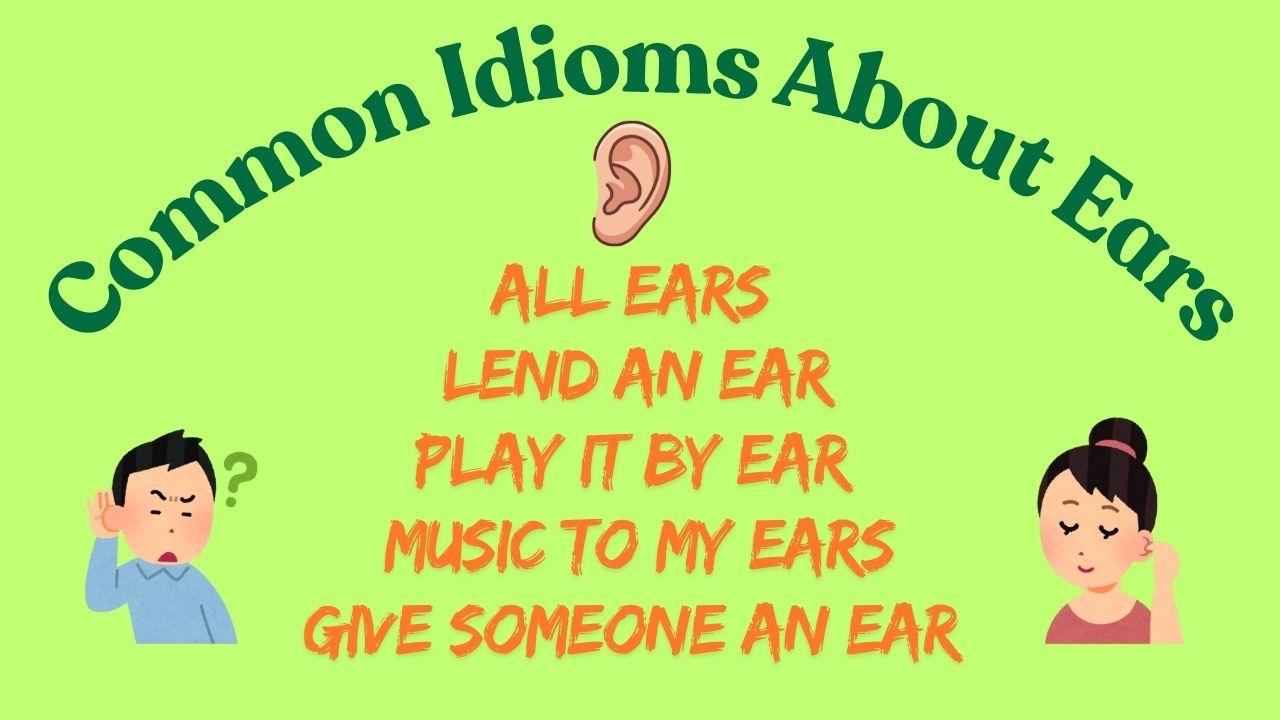
If you have ever been told to “keep your ears open” or accused of being “all ears,” you already know how often ears show up in everyday English. Idioms about ears are especially popular because they relate directly to listening, attention, gossip, secrets, and awareness.
In simple terms, ear idioms are expressions that use the word “ear” to describe how we listen, react, or respond to situations, not the physical ear itself. In this article, I’ve put together 35 commonly used idioms about ears, explained in clear language, with real-life examples and practical usage tips.
Whether you are a student, a competitive exam aspirant, a content writer, or someone trying to improve spoken English, this guide will help you understand and use these idioms naturally.
1. All Ears

Meaning
To listen very carefully and with full attention.
In a Sentence
Go ahead and tell me your plan. I’m all ears.
Other Ways to Say
Listening carefully, paying full attention
When to Use
Use this when you want to show interest or readiness to listen.
Usage Tip
Common in friendly and professional conversations.
2. Keep Your Ears Open

Meaning
To stay alert and watchful for information.
In a Sentence
Keep your ears open for any updates about the interview.
Other Ways to Say
Stay alert, be watchful
When to Use
Helpful when expecting news or instructions.
Usage Tip
Often used as advice or a warning.
3. Music to My Ears

Meaning
Something very pleasant or satisfying to hear.
In a Sentence
Hearing that the project was approved was music to my ears.
Other Ways to Say
Great news, wonderful to hear
When to Use
Used when reacting to good news.
Usage Tip
Works well in both casual and formal speech.
4. Turn a Deaf Ear

Meaning
To ignore someone intentionally.
In a Sentence
He turned a deaf ear to all the complaints.
Other Ways to Say
Ignore, pay no attention
When to Use
Often used in serious or critical situations.
Usage Tip
Common in news reports and formal writing.
5. Fall on Deaf Ears

Meaning
When advice or a request is ignored.
In a Sentence
My warnings fell on deaf ears.
Other Ways to Say
Ignored completely, not listened to
When to Use
Used when efforts to communicate fail.
Usage Tip
Frequently used in professional contexts.
6. Give Someone an Ear
Meaning
To listen to someone sympathetically.
In a Sentence
She gave me an ear when I was feeling low.
Other Ways to Say
Listen patiently, hear someone out
When to Use
Useful in emotional or supportive conversations.
Usage Tip
Sounds warm and personal.
7. Lend an Ear

Meaning
To listen carefully or supportively.
In a Sentence
Thank you for lending an ear during a tough time.
Other Ways to Say
Offer support, listen kindly
When to Use
Used when appreciating someone’s attention.
Usage Tip
Very common in spoken English.
8. Play It by Ear

Meaning
To decide as things happen rather than planning.
In a Sentence
We don’t have a fixed plan. Let’s play it by ear.
Other Ways to Say
Go with the flow, decide later
When to Use
Useful in informal planning.
Usage Tip
Avoid in very formal writing.
9. Out of Earshot
Meaning
Too far away to hear.
In a Sentence
They spoke quietly, making sure they were out of earshot.
Other Ways to Say
Out of hearing range
When to Use
Often used in descriptive writing.
Usage Tip
Good for storytelling or reports.
10. In One Ear and Out the Other
Meaning
Quickly forgotten after being heard.
In a Sentence
Everything I said went in one ear and out the other.
Other Ways to Say
Ignored, not remembered
When to Use
Used to express frustration.
Usage Tip
Best suited for casual speech.
11. Be All Ears

Meaning
Very eager to listen.
In a Sentence
I’m all ears if you have something important to say.
Other Ways to Say
Ready to listen
When to Use
Polite and engaging in conversation.
Usage Tip
Sounds friendly and open.
12. Have an Ear for Something

Meaning
To be good at recognizing sounds or language.
In a Sentence
She has an ear for languages.
Other Ways to Say
Naturally talented at listening
When to Use
Often used for music or languages.
Usage Tip
Works well in formal descriptions.
13. Box Someone’s Ears

Meaning
To scold or punish physically (old-fashioned).
In a Sentence
The teacher threatened to box his ears.
Other Ways to Say
Scold sharply
When to Use
Mostly historical or literary use.
Usage Tip
Avoid in modern professional writing.
14. Wet Behind the Ears

Meaning
Inexperienced or new.
In a Sentence
He’s still wet behind the ears at work.
Other Ways to Say
Inexperienced, green
When to Use
Used to describe beginners.
Usage Tip
Can sound critical if not used carefully.
15. Chew Someone’s Ear Off

Meaning
To talk too much.
In a Sentence
He chewed my ear off about his vacation.
Other Ways to Say
Talk endlessly
When to Use
Casual, humorous contexts.
Usage Tip
Common in spoken English.
16. Keep It Coming Out of Your Ears
Meaning
To have too much of something.
In a Sentence
We have paperwork coming out of our ears.
Other Ways to Say
Excessive amount
When to Use
Informal situations.
Usage Tip
Adds humor to complaints.
17. Bend Someone’s Ear

Meaning
To talk seriously or persistently.
In a Sentence
He bent my ear about office issues.
Other Ways to Say
Speak at length
When to Use
Casual or semi-formal use.
Usage Tip
Often used humorously.
18. Have Someone’s Ear
Meaning
To have someone’s attention or influence.
In a Sentence
The manager has the CEO’s ear.
Other Ways to Say
Be influential
When to Use
Professional or political contexts.
Usage Tip
Useful in business writing.
19. Prick Up Your Ears

Meaning
To listen more carefully.
In a Sentence
I pricked up my ears when I heard my name.
Other Ways to Say
Pay closer attention
When to Use
Descriptive or narrative writing.
Usage Tip
Less common in casual speech.
20. Ears Are Burning

Meaning
Someone is talking about you.
In a Sentence
My ears must be burning; were you discussing me?
Other Ways to Say
Being talked about
When to Use
Light-hearted conversations.
Usage Tip
Often used jokingly.
21. Close Your Ears

Meaning
To refuse to listen.
In a Sentence
He closed his ears to criticism.
Other Ways to Say
Reject advice
When to Use
Critical or serious tone.
Usage Tip
Useful in opinion writing.
22. Open Someone’s Ears

Meaning
To make someone aware.
In a Sentence
The incident opened his ears to the problem.
Other Ways to Say
Make aware
When to Use
Reflective writing.
Usage Tip
Sounds thoughtful and mature.
23. Have Big Ears
Meaning
To hear things easily or eavesdrop.
In a Sentence
Be careful, he has big ears.
Other Ways to Say
Eavesdropper
When to Use
Informal contexts.
Usage Tip
Can sound teasing.
24. Go in One Ear

Meaning
To hear briefly.
In a Sentence
The instructions went in one ear.
Other Ways to Say
Half-listened
When to Use
Casual conversation.
Usage Tip
Often paired with “out the other.”
25. Give Ear to

Meaning
To listen seriously.
In a Sentence
The committee gave ear to public concerns.
Other Ways to Say
Listen carefully
When to Use
Formal or official writing.
Usage Tip
Good for reports and articles.
26. Lend a Sympathetic Ear

Meaning
To listen with understanding.
In a Sentence
She lent a sympathetic ear to his troubles.
Other Ways to Say
Offer emotional support
When to Use
Emotional or supportive tone.
Usage Tip
Sounds compassionate.
27. Hard of Hearing
Meaning
Having difficulty hearing or understanding.
In a Sentence
He’s hard of hearing, so speak clearly.
Other Ways to Say
Hearing impaired
When to Use
Sensitive contexts.
Usage Tip
Use respectfully.
28. Have Ears Only for

Meaning
To listen to only one thing or person.
In a Sentence
She had ears only for her coach.
Other Ways to Say
Focused completely
When to Use
Descriptive writing.
Usage Tip
Adds emotional depth.
29. Keep Something Under Your Hat and Ears

Meaning
To keep a secret.
In a Sentence
Keep this under your hat and ears.
Other Ways to Say
Don’t reveal
When to Use
Informal or friendly advice.
Usage Tip
Less common but interesting.
30. Ring in Someone’s Ears
Meaning
To be remembered clearly.
In a Sentence
Her words still ring in my ears.
Other Ways to Say
Stay in memory
When to Use
Emotional or reflective writing.
Usage Tip
Very expressive.
31. Be Up to Your Ears

Meaning
Very busy or overloaded.
In a Sentence
I’m up to my ears in work.
Other Ways to Say
Extremely busy
When to Use
Casual speech.
Usage Tip
Widely used in daily English.
32. Keep Your Ears Shut

Meaning
To ignore intentionally.
In a Sentence
He kept his ears shut during the argument.
Other Ways to Say
Refuse to listen
When to Use
Critical tone.
Usage Tip
Sounds firm.
33. Whisper in Someone’s Ear

Meaning
To suggest secretly.
In a Sentence
She whispered an idea in his ear.
Other Ways to Say
Suggest privately
When to Use
Narrative or storytelling.
Usage Tip
Adds intrigue.
34. Ears Wide Open

Meaning
Listening carefully and alertly.
In a Sentence
Walk in with your ears wide open.
Other Ways to Say
Be alert
When to Use
Advice or warning.
Usage Tip
Motivational tone.
35. Get Someone’s Ear

Meaning
To gain attention.
In a Sentence
I finally got the editor’s ear.
Other Ways to Say
Gain attention
When to Use
Professional contexts.
Usage Tip
Useful in business writing.
Conclusion
Idioms about ears are deeply rooted in everyday English because listening plays such a big role in communication. Once you understand what these expressions really mean, they become easy to remember and even easier to use.
If you start using just a few of these idioms naturally in conversations or writing, your English will instantly sound more confident and fluent. The key is not to memorize them all at once, but to notice when and how native speakers use them.
Keep your ears open, and you’ll pick them up faster than you think.