Sadness is a universal emotion—but describing it can be surprisingly complex. Sometimes “I feel sad” just doesn’t capture the depth of what we’re experiencing.
Quick answer: Idioms for sadness are figurative expressions that describe emotional pain, disappointment, or grief in a more vivid and relatable way.
Want to improve your emotional expression in English? This guide breaks down 33 powerful idioms for sadness, helping you understand their meanings, see them in context, and use them effectively in both writing and conversation.
Why Idioms for Sadness Matter
Sadness shows up in many forms—heartbreak, disappointment, loneliness, or quiet reflection. Idioms help us express these feelings more precisely.
From my experience, using idioms:
- Makes your language more natural and expressive
- Helps you connect emotionally with others
- Adds depth to storytelling and conversation
Let’s explore them.
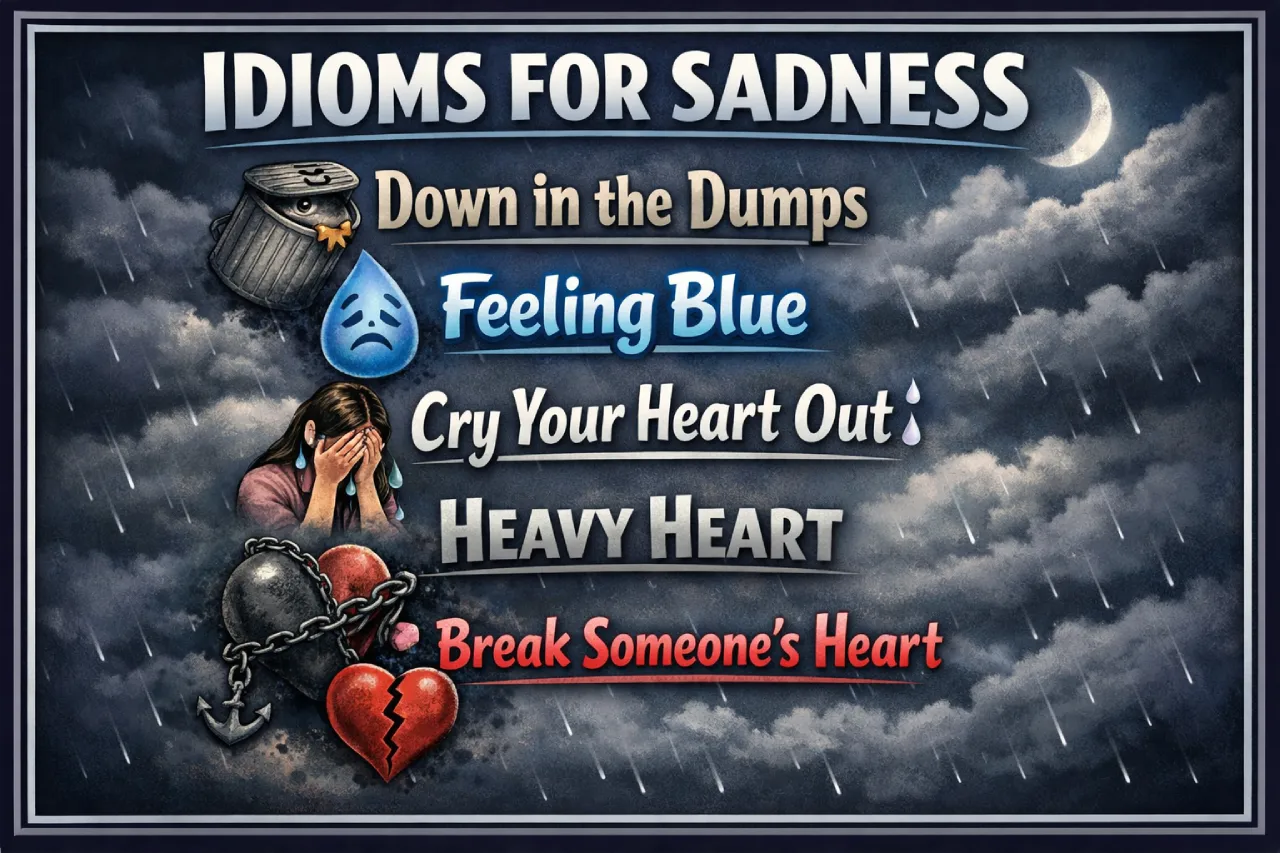
1. Down in the Dumps
Meaning: Feeling very sad
In a Sentence: She’s been down in the dumps all week.
Other Ways to Say: Feeling low, depressed
Tone: Informal
2. Feeling Blue
Meaning: Slightly sad or depressed
In a Sentence: I’ve been feeling blue lately.
Other Ways to Say: A bit sad
Tone: Gentle
3. Cry Your Heart Out

Meaning: Cry intensely
In a Sentence: He cried his heart out after the loss.
Other Ways to Say: Sob deeply
Tone: Emotional
4. Heavy Heart

Meaning: Deep sadness
In a Sentence: She spoke with a heavy heart.
Other Ways to Say: Emotional burden
Tone: Serious
5. Break Someone’s Heart
Meaning: Cause emotional pain
In a Sentence: The news broke his heart.
Other Ways to Say: Hurt deeply
Tone: Emotional
6. Heart Sinks

Meaning: Sudden disappointment
In a Sentence: My heart sank when I saw the results.
Other Ways to Say: Feel discouraged
Tone: Reflective
7. Lump in Your Throat

Meaning: Feeling like you’re about to cry
In a Sentence: She had a lump in her throat.
Other Ways to Say: Emotional choking
Tone: Subtle
8. In Tears
Meaning: Crying
In a Sentence: He was in tears after the argument.
Other Ways to Say: Crying
Tone: Neutral
9. Fall Apart

Meaning: Lose emotional control
In a Sentence: She fell apart after hearing the news.
Other Ways to Say: Break down
Tone: Emotional
10. Downhearted

Meaning: Feeling discouraged
In a Sentence: He felt downhearted after the failure.
Other Ways to Say: Disappointed
Tone: Mild
11. Cry Over Spilled Milk
Meaning: Be sad about something that can’t be changed
In a Sentence: Don’t cry over spilled milk.
Other Ways to Say: Move on
Tone: Advisory
12. In the Depths of Despair
Meaning: Extremely sad
In a Sentence: She was in the depths of despair.
Other Ways to Say: Deep sadness
Tone: Dramatic
13. Break Down

Meaning: Start crying
In a Sentence: He broke down during the speech.
Other Ways to Say: Cry
Tone: Emotional
14. Tear Up
Meaning: Eyes fill with tears
In a Sentence: I teared up watching the movie.
Other Ways to Say: Get emotional
Tone: Light
15. Lose Heart
Meaning: Become discouraged
In a Sentence: Don’t lose heart—you’ll succeed.
Other Ways to Say: Give up hope
Tone: Encouraging
16. Heartbroken

Meaning: Extremely sad
In a Sentence: She was heartbroken after the breakup.
Other Ways to Say: Devastated
Tone: Strong
17. Downcast
Meaning: Showing sadness
In a Sentence: He looked downcast all day.
Other Ways to Say: Gloomy
Tone: Neutral
18. Under the Weather
Meaning: Feeling unwell or low
In a Sentence: I’ve been under the weather lately.
Other Ways to Say: Not feeling well
Tone: Mild
19. Cry a River

Meaning: Cry a lot
In a Sentence: She cried a river over the loss.
Other Ways to Say: Cry heavily
Tone: Informal
20. Gloom and Doom
Meaning: Extreme pessimism
In a Sentence: Stop spreading gloom and doom.
Other Ways to Say: Negativity
Tone: Negative
21. Feel Low
Meaning: Slight sadness
In a Sentence: I’ve been feeling low recently.
Other Ways to Say: Sad
Tone: Casual
22. Long Face
Meaning: Looking sad
In a Sentence: Why the long face?
Other Ways to Say: Sad expression
Tone: Informal
23. Sinking Feeling
Meaning: Sudden sadness or worry
In a Sentence: I had a sinking feeling about it.
Other Ways to Say: Dread
Tone: Reflective
24. Wallow in Self-Pity
Meaning: Stay stuck in sadness
In a Sentence: Don’t wallow in self-pity.
Other Ways to Say: Dwell on sadness
Tone: Critical
25. Cry Yourself to Sleep
Meaning: Sleep after crying
In a Sentence: She cried herself to sleep.
Other Ways to Say: Emotional exhaustion
Tone: Emotional
26. Blue Mood
Meaning: Sad emotional state
In a Sentence: He’s been in a blue mood.
Other Ways to Say: Feeling down
Tone: Gentle
27. Tear Your Hair Out
Meaning: Extreme frustration or sadness
In a Sentence: She was tearing her hair out.
Other Ways to Say: Stress out
Tone: Dramatic
28. Down in the Mouth
Meaning: Looking unhappy
In a Sentence: He’s been down in the mouth lately.
Other Ways to Say: Sad expression
Tone: Informal
29. Heartache

Meaning: Emotional pain
In a Sentence: The loss caused deep heartache.
Other Ways to Say: Sorrow
Tone: Serious
30. In a Dark Place
Meaning: Deep emotional struggle
In a Sentence: He’s been in a dark place.
Other Ways to Say: Mentally struggling
Tone: Serious
31. Feel Like the World Is Ending
Meaning: Overwhelming sadness
In a Sentence: It felt like the world was ending.
Other Ways to Say: Devastated
Tone: Dramatic
32. Cry on Someone’s Shoulder
Meaning: Seek comfort
In a Sentence: She cried on her friend’s shoulder.
Other Ways to Say: Seek support
Tone: Emotional
33. Wear Your Heart on Your Sleeve

Meaning: Show emotions openly
In a Sentence: He wears his heart on his sleeve.
Other Ways to Say: Openly emotional
Tone: Neutral
Final Thoughts
Sadness is a part of life, and idioms give us a way to express it more naturally and meaningfully. Whether it’s feeling “blue,” having a “heavy heart,” or experiencing a “sinking feeling,” these expressions help turn emotions into language that others can understand.
When I write or speak, I often use these idioms to make emotions feel more real and relatable. They don’t just describe sadness—they help others feel it too.
If you want to deepen your understanding, you can explore ideas from this helpful guide on sadness idioms or learn additional expressions through this practical breakdown of emotional idioms, but the real value comes from using these phrases naturally in your own conversations.
Now here’s something to think about:
Which of these idioms best describes how sadness feels to you?