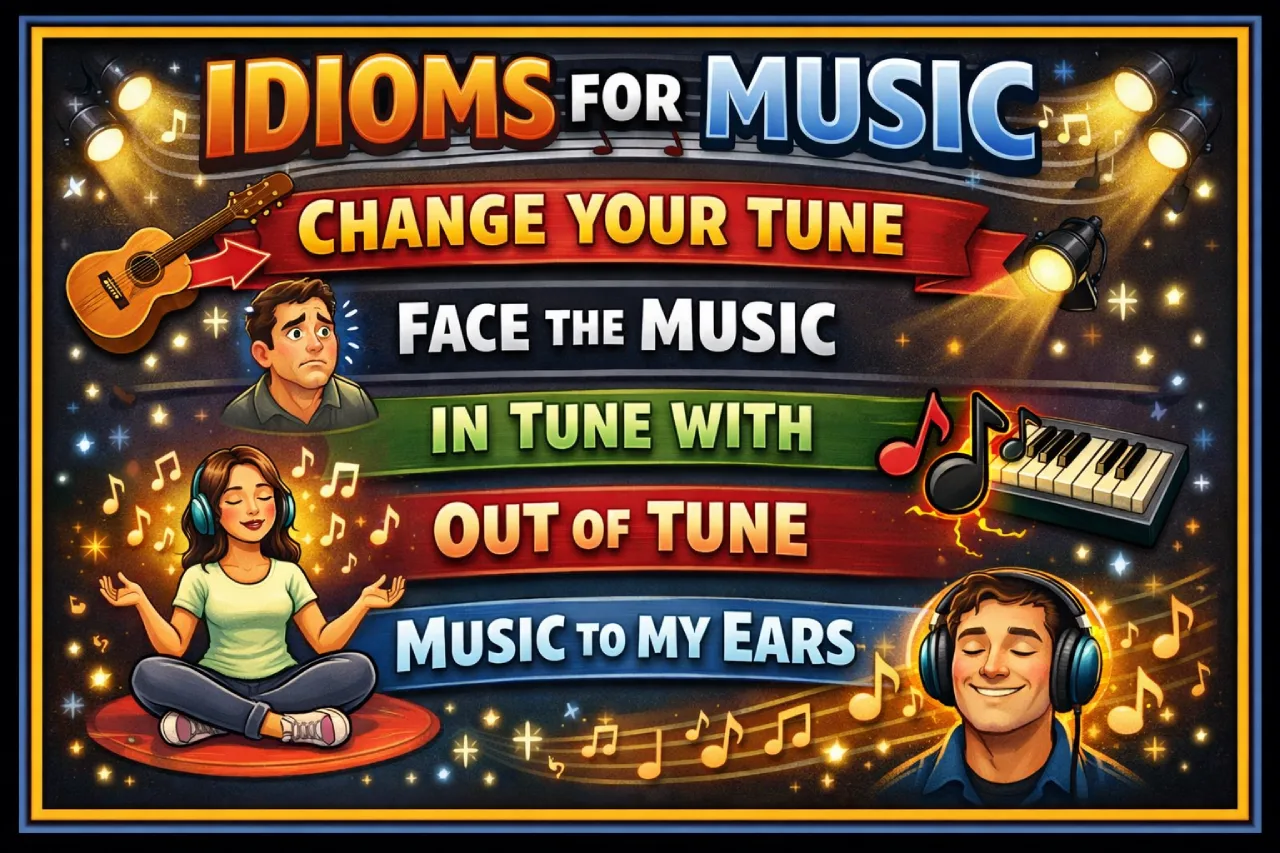
Music isn’t just something we listen to—it’s something we feel. And because it’s such a universal part of life, it has shaped the way we speak, too.
Quick answer: Idioms for music are expressions inspired by musical concepts like rhythm, harmony, and performance that describe everyday situations in a creative and relatable way.
In this article, I’ll walk you through 30 popular music idioms, each with clear meanings, one-line examples, and practical usage tips. Whether you’re writing, speaking, or simply improving your English, these idioms will help you sound more natural and expressive.
Why Music Idioms Matter in Everyday English
Music idioms are everywhere—in conversations, business settings, and even headlines. They help simplify complex ideas and add personality to your language.
Think about it: saying someone “changed their tune” instantly tells a story without needing a long explanation.
I often use music idioms in writing because they:
- Make language more engaging
- Add rhythm and flow to sentences
- Help explain emotions or changes clearly
- Feel natural to native speakers
Let’s explore them.
1. Change Your Tune
Meaning: To change your opinion or attitude
In a Sentence: He quickly changed his tune after seeing the results.
Other Ways to Say: Shift your stance, rethink
When to Use: After a sudden opinion change
Tone: Neutral
2. Face the Music
Meaning: Accept consequences
In a Sentence: It’s time to face the music and admit the mistake.
Other Ways to Say: Take responsibility
When to Use: Accountability
Tone: Serious
3. In Tune With
Meaning: In agreement or harmony
In a Sentence: She’s in tune with her team’s goals.
Other Ways to Say: Aligned, synchronized
When to Use: Teamwork
Tone: Positive
4. Out of Tune
Meaning: Not in agreement or harmony
In a Sentence: His ideas were out of tune with the group.
Other Ways to Say: Misaligned
When to Use: Conflict
Tone: Neutral
5. Music to My Ears

Meaning: Something pleasant to hear
In a Sentence: That news was music to my ears.
Other Ways to Say: Great news
When to Use: Positive reactions
Tone: Happy
6. Strike a Chord
Meaning: Create an emotional response
In a Sentence: The speech struck a chord with the audience.
Other Ways to Say: Resonate
When to Use: Emotional impact
Tone: Reflective
7. March to the Beat of Your Own Drum
Meaning: Be independent
In a Sentence: She marches to the beat of her own drum.
Other Ways to Say: Be unique
When to Use: Individuality
Tone: Positive
8. Blow Your Own Trumpet

Meaning: Brag about yourself
In a Sentence: He loves to blow his own trumpet.
Other Ways to Say: Show off
When to Use: Self-promotion
Tone: Slightly negative
9. Call the Tune
Meaning: Be in control
In a Sentence: The manager calls the tune here.
Other Ways to Say: Be in charge
When to Use: Authority
Tone: Neutral
10. Fine-Tune
Meaning: Make small improvements
In a Sentence: We need to fine-tune the strategy.
Other Ways to Say: Adjust, refine
When to Use: Optimization
Tone: Professional
11. Play It by Ear
Meaning: Improvise
In a Sentence: Let’s play it by ear and see what happens.
Other Ways to Say: Go with the flow
When to Use: Unplanned situations
Tone: Casual
12. Hit the Right Note
Meaning: Be appropriate or successful
In a Sentence: His message hit the right note.
Other Ways to Say: Be effective
When to Use: Communication
Tone: Positive
13. Hit a Sour Note
Meaning: Cause discomfort or tension
In a Sentence: That comment hit a sour note.
Other Ways to Say: Create awkwardness
When to Use: Social situations
Tone: Negative
14. Ring a Bell
Meaning: Sound familiar
In a Sentence: That name rings a bell.
Other Ways to Say: Seem familiar
When to Use: Memory
Tone: Neutral
15. Sing a Different Tune
Meaning: Change attitude
In a Sentence: He’s singing a different tune now.
Other Ways to Say: Change perspective
When to Use: After change
Tone: Neutral
16. Make a Song and Dance About It
Meaning: Make a big deal
In a Sentence: Don’t make a song and dance about it.
Other Ways to Say: Overreact
When to Use: Minor issues
Tone: Slightly critical
17. Strike the Right Chord
Meaning: Connect emotionally
In a Sentence: The campaign struck the right chord.
Other Ways to Say: Resonate
When to Use: Communication
Tone: Positive
18. Lead the Band
Meaning: Take leadership
In a Sentence: She leads the band in every project.
Other Ways to Say: Take charge
When to Use: Leadership
Tone: Positive
19. Dance to Someone’s Tune
Meaning: Follow someone’s orders
In a Sentence: He refuses to dance to their tune.
Other Ways to Say: Obey
When to Use: Control situations
Tone: Slightly negative
20. In Harmony
Meaning: Peaceful agreement
In a Sentence: The team works in harmony.
Other Ways to Say: United
When to Use: Cooperation
Tone: Positive
21. Out of Harmony
Meaning: Conflict
In a Sentence: Their ideas are out of harmony.
Other Ways to Say: Disagreement
When to Use: Conflict
Tone: Neutral
22. Blow the Whistle
Meaning: Report wrongdoing
In a Sentence: He blew the whistle on the fraud.
Other Ways to Say: Expose
When to Use: Ethics
Tone: Serious
23. Strike Up a Tune
Meaning: Start playing music or begin something
In a Sentence: The band struck up a tune.
Other Ways to Say: Begin
When to Use: Events
Tone: Neutral
24. Play Second Fiddle
Meaning: Take a lesser role
In a Sentence: He’s tired of playing second fiddle.
Other Ways to Say: Secondary role
When to Use: Hierarchy
Tone: Slightly negative
25. Change Your Pitch
Meaning: Adjust approach
In a Sentence: You need to change your pitch.
Other Ways to Say: Modify strategy
When to Use: Business
Tone: Professional
26. Strike a Discordant Note
Meaning: Create conflict
In a Sentence: His words struck a discordant note.
Other Ways to Say: Cause tension
When to Use: Conflict
Tone: Formal
27. Set the Tone
Meaning: Establish mood
In a Sentence: The opening speech set the tone.
Other Ways to Say: Define atmosphere
When to Use: Events
Tone: Neutral
28. Change the Tune
Meaning: Alter direction
In a Sentence: It’s time to change the tune.
Other Ways to Say: Shift approach
When to Use: Strategy
Tone: Neutral
29. Play to the Gallery

Meaning: Act for attention
In a Sentence: He’s just playing to the gallery.
Other Ways to Say: Seek approval
When to Use: Public behavior
Tone: Critical
30. End on a High Note
Meaning: Finish successfully
In a Sentence: The event ended on a high note.
Other Ways to Say: Strong finish
When to Use: Conclusions
Tone: Positive
Final Thoughts
Music idioms bring rhythm, emotion, and clarity into everyday language. They help us express ideas in a way that feels natural, engaging, and easy to understand.
When I use phrases like “strike a chord” or “end on a high note,” I notice how much more lively my writing becomes. These idioms don’t just communicate—they connect.
If you’re working on improving your English, start by using a few of these expressions in your daily conversations or writing. Over time, they’ll become second nature.
For more insights into idioms and figurative language, you can explore helpful resources like
Use them as inspiration—but make the language your own.
Now I’ll leave you with a simple thought:
Which of these idioms will you start using today?